
If every satellite operator in orbit simultaneously stopped dodging debris and dead spacecraft, researchers now estimate the expected time to a potential collision in low Earth orbit could be measured in days — not years, not decades. That single figure captures just how tightly wound our orbital environment has become.
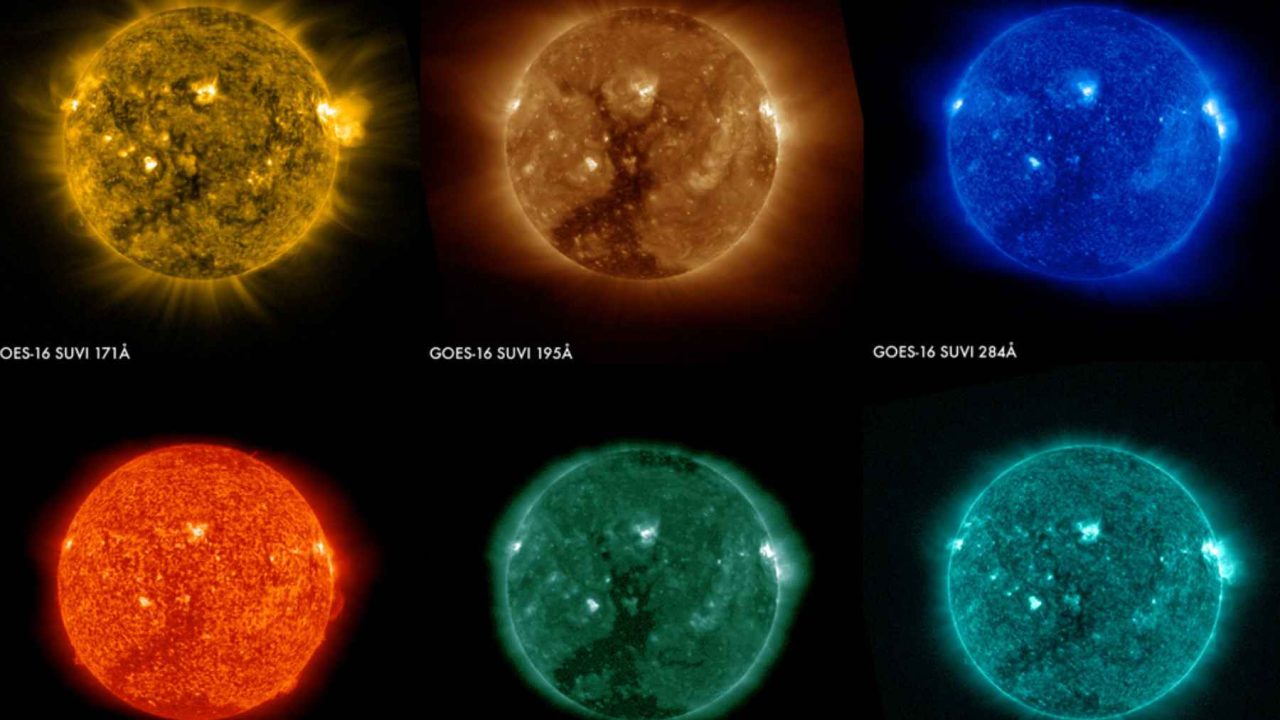
And the timing of that warning couldn’t be more uncomfortable. The Sun is currently passing through its most active phase in its roughly 11-year cycle, and that solar activity has a direct, measurable effect on the satellites, GPS networks, and communications systems that billions of people rely on every single day.
These two pressures — a crowded orbit and a restless Sun — are converging in a way that scientists say deserves far more public attention than it’s currently getting.
What the CRASH Clock Is Actually Measuring
A research team has developed a new metric called the CRASH Clock — short for “Collision Realization And Significant Harm.” The concept is straightforward, even if the implications are alarming.
In a preprint posted on arXiv, the researchers behind the clock estimate how long it would take for a potential collision to occur in low Earth orbit if tracked objects — satellites, debris, and abandoned rocket bodies — simply stopped maneuvering around each other. The answer, right now, is days.
The researchers describe it as a stress gauge for an orbital environment that only functions because human operators keep actively intervening. The moment that intervention stops, the math turns grim very quickly.
The Outer Space Institute now publishes a live version of this clock, giving the public and policymakers a real-time window into just how stressed low Earth orbit has become. It’s less a doomsday device and more a vital sign monitor — one that’s currently showing elevated readings.
Why the Sun Makes Everything More Complicated
Orbital crowding alone would be enough of a problem. But scientists are raising the alarm about a second, less obvious threat: solar activity.
The Sun operates on an approximately 11-year cycle, moving between periods of relative calm and intense activity. Right now, it is in its most active phase. During periods of high solar activity, the Sun emits bursts of energy and charged particles that interact with Earth’s upper atmosphere and the space environment surrounding our planet.
That interaction doesn’t just create beautiful auroras. It can scramble satellite operations, interfere with GPS accuracy, and disrupt the communications infrastructure that modern life depends on. For satellite operators already performing complex, constant collision-avoidance maneuvers, added interference from space weather introduces another layer of unpredictability.
The core question researchers are now asking isn’t simply “how many objects are in orbit?” It’s something harder: how resilient is the entire system when conditions get messy?
The Scale of What’s at Stake
Low Earth orbit has become extraordinarily crowded in recent years. The objects being tracked include active satellites, defunct spacecraft, fragments from past collisions, and spent rocket bodies — all moving at thousands of miles per hour.
The CRASH framework puts that crowding into stark perspective. Here’s a breakdown of the key elements involved:
| Term / Concept | What It Means | Current Status |
|---|---|---|
| CRASH Clock | Estimated time to potential collision if maneuvering stopped | Measured in days |
| Tracked Objects | Satellites, debris, abandoned rocket bodies in LEO | Increasingly dense |
| Solar Cycle Phase | Position in the Sun’s ~11-year activity cycle | Most active phase |
| Space Weather Impact | Effect of solar activity on satellite operations | Can scramble operations |
| Live CRASH Clock | Public-facing real-time stress gauge for LEO | Published by Outer Space Institute |
What makes this moment particularly significant is the combination of factors happening simultaneously. A crowded orbit is manageable when conditions are stable. Solar interference is manageable when orbit isn’t dangerously packed. Both at once is a different kind of challenge entirely.
How This Could Affect You Directly
It’s easy to think of orbital debris as a problem for space agencies and satellite companies. It isn’t. The infrastructure sitting in low Earth orbit underpins systems that most people use without thinking about them.
- GPS navigation — from driving directions to precision agriculture and aviation routing — depends on satellites in orbit functioning without disruption.
- Communications networks, including internet services delivered via satellite, run through the same crowded orbital lanes researchers are now flagging as stressed.
- Weather forecasting and climate monitoring rely on satellites that could be affected by both debris collisions and solar interference.
- Emergency services in many parts of the world depend on satellite-based communication links that have no ground-based backup.
A single significant collision in low Earth orbit could generate thousands of new debris fragments, each capable of triggering further collisions in a cascade effect. Scientists have long warned about this scenario — sometimes called Kessler Syndrome — and the CRASH Clock is, in part, a tool designed to communicate how close the conditions for that kind of cascade are becoming.
What Researchers and Institutions Are Watching Now
The preprint describing the CRASH Clock methodology was posted on arXiv, making it available for review by the broader scientific community before formal peer review. That’s a deliberate choice — the researchers appear to want the findings in front of as many eyes as possible, as quickly as possible.
The Outer Space Institute’s decision to publish a live version of the clock suggests this isn’t purely an academic exercise. Making the metric publicly accessible is an attempt to shift the conversation from specialist circles to policymakers, satellite operators, and the public.
Researchers note that the system currently works — but only because operators keep intervening. The CRASH Clock measures what happens the moment that human effort falters. With solar activity adding unpredictability to satellite operations, the margin for error is narrowing at exactly the wrong time.
Whether governments and the private space industry respond with binding coordination frameworks or voluntary guidelines remains an open question. What isn’t open to debate anymore is the urgency of asking it.
Frequently Asked Questions
What does the CRASH Clock measure?
It estimates how long it would take for a potential collision to occur in low Earth orbit if all tracked objects — satellites, debris, and rocket bodies — stopped performing collision-avoidance maneuvers.
How soon could a collision happen if maneuvering stopped?
According to the researchers behind the CRASH Clock, the expected time to a potential collision is currently measured in days, not years.
Why is solar activity a concern for satellites right now?
The Sun is currently in its most active phase of its roughly 11-year cycle, and heightened solar activity can interfere with satellite operations, GPS accuracy, and communications systems.
Who publishes the live CRASH Clock?
The Outer Space Institute publishes a live, publicly accessible version of the CRASH Clock based on the researchers’ methodology.
Could a collision in orbit affect everyday technology like GPS?
Yes — GPS navigation, satellite communications, and weather forecasting all depend on infrastructure in low Earth orbit that could be disrupted by collisions or solar interference.
Has the CRASH Clock research been peer-reviewed?
As of the reporting on this topic, the research was posted as a preprint on arXiv, meaning it was available for scientific review but had not yet completed formal peer review.


Leave a Reply