
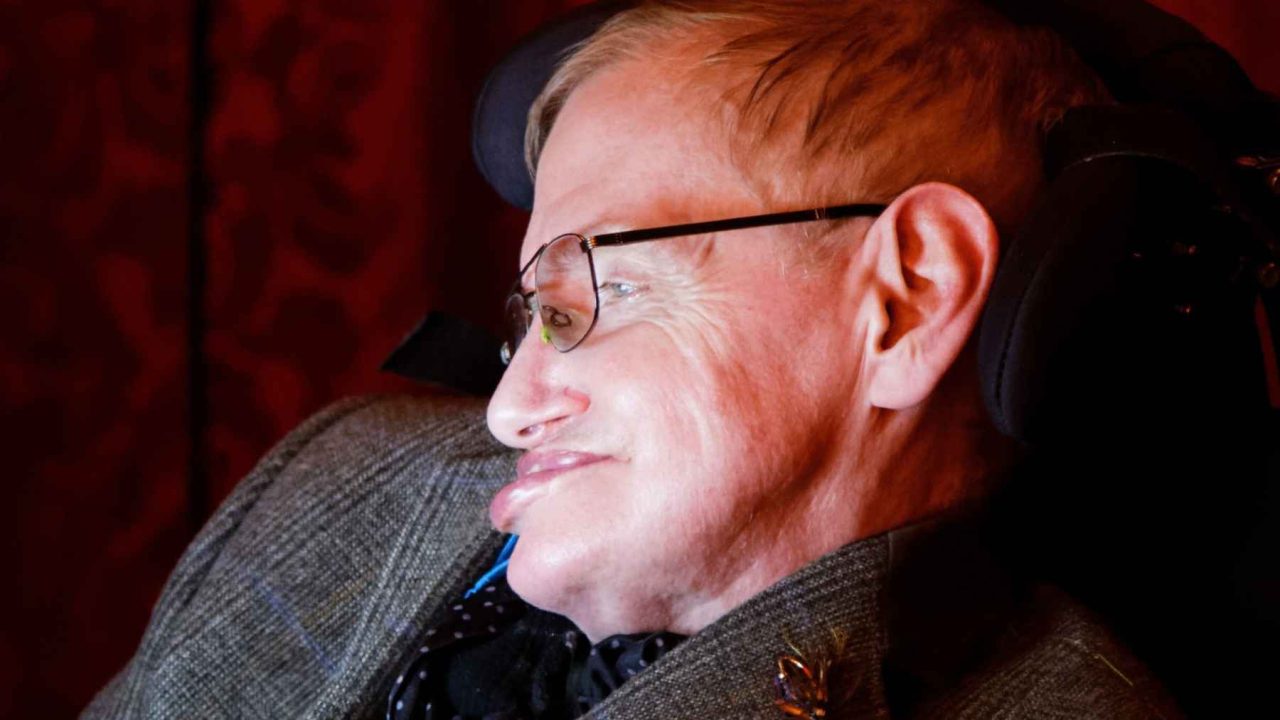
Doctors told Stephen Hawking he had two years to live. He lived for more than five decades after that diagnosis, died at 76, and left behind a body of scientific work that reshaped how humanity understands space, time, and the nature of the universe. The gap between what was predicted for him and what he actually accomplished is one of the most striking stories in modern science.
Now a quote widely attributed to him — “Quiet people have the loudest minds” — is circulating online again, sparking fresh conversation about the relationship between stillness, introversion, and intellectual power. The phrase travels fast on social media. But the story behind it, and behind the man it’s linked to, is worth slowing down for.
Because while the quote itself may be unverified, the life it points toward is entirely real — and more extraordinary than any single sentence can capture.
The Quote Everyone Is Sharing — and What the Record Actually Shows
The line “Quiet people have the loudest minds” has been attributed to Stephen Hawking across countless posts, memes, and motivational graphics. It resonates because it feels true. It captures something about the way deep thinkers often appear reserved on the outside while processing enormous ideas within.
But readers should approach the attribution carefully. According to reporting that cross-references the Stephen Hawking Estate’s published materials, this specific wording does not appear in the official selection of Hawking’s documented quotes. That doesn’t mean he never said something like it — but it does mean the exact phrasing, as it circulates online, cannot be confirmed as his.
What can be confirmed is the life that makes the sentiment believable. And that life is remarkable on its own terms.
Who Stephen Hawking Actually Was
Hawking was born in Oxford on January 8, 1942. He became one of the most recognized scientists of the modern era — not because his path was smooth, but because the questions he asked were enormous and the obstacles he faced were equally immense.
His central areas of inquiry cut to the heart of existence itself:
- What happens inside a black hole?
- Did the universe have a beginning?
- How much can one human mind accomplish when the body starts to fail?
That last question became personal very quickly. Shortly after his 21st birthday, Hawking was diagnosed with motor neurone disease — a progressive and incurable condition that slowly erodes muscle control while leaving the brain fully intact. Doctors gave him roughly two years to live.
He lived until March 14, 2018, dying in Cambridge at the age of 76. More than five decades beyond what medicine predicted for him.
Key Facts About Stephen Hawking at a Glance
| Detail | Information |
|---|---|
| Date of birth | January 8, 1942 |
| Place of birth | Oxford, England |
| Diagnosis | Motor neurone disease, shortly after age 21 |
| Initial prognosis | Approximately two years to live |
| Actual lifespan after diagnosis | More than five decades |
| Date of death | March 14, 2018 |
| Place of death | Cambridge, England |
| Age at death | 76 |
| Viral quote attribution (verified?) | Not confirmed by Stephen Hawking Estate |
Why This Quote Keeps Coming Back — and Why It Matters
There’s a reason this particular phrase, verified or not, keeps finding new audiences. It touches on something many people recognize in themselves or in someone they know — the person in the room who says the least and thinks the most. The student who doesn’t raise their hand but has already solved the problem. The colleague who stays quiet in meetings and then sends the email that reframes everything.
Hawking’s story gives that feeling a face. Here was a man who, as his disease progressed, lost the ability to speak without assistance, lost the use of his hands, lost nearly every conventional channel through which a person communicates with the world. And yet the ideas kept coming. The papers kept being written. The books reached millions of readers. The lectures continued.
His mind, by all accounts, never slowed. The body that housed it became quieter and quieter, and the thinking became, if anything, more expansive.
That’s not a metaphor. That’s a documented life.
The Part of This Story Most Posts Leave Out
When the quote circulates without context, it risks becoming just another piece of feel-good content — easy to share, easy to forget. What gets lost is the specific and almost unimaginable reality of what Hawking navigated every day.
Motor neurone disease does not affect the brain. That clinical fact is what made his situation so singular. The disease took away nearly every physical tool a scientist typically uses — writing, speaking freely, moving through the world — while leaving his capacity for abstract thought completely untouched. He was, in a very literal sense, a mind operating under extraordinary external constraints.
The result was a career that spanned decades, produced foundational work on black holes and cosmology, and communicated complex science to general audiences in ways that few researchers ever manage. His 1988 book on the origins of the universe became one of the best-known popular science titles ever published.
Whether or not he said “quiet people have the loudest minds,” he lived it more completely than almost anyone in recorded history.
What This Viral Moment Is Really Telling Us
The renewed circulation of this quote says something about what people are looking for right now. In an environment that rewards loudness — fast takes, high volume, constant output — there’s an obvious appeal to the idea that depth and quiet carry their own kind of power.
Hawking’s verified legacy supports that instinct. He didn’t shout. He couldn’t, eventually. He communicated through a speech synthesizer, one word at a time, and still managed to change how scientists and ordinary people alike think about the cosmos.
The quote may or may not be his. The proof of the idea behind it absolutely is.
Frequently Asked Questions
Did Stephen Hawking actually say “Quiet people have the loudest minds”?
This specific wording does not appear in the official quote selection published by the Stephen Hawking Estate, so the attribution cannot be confirmed as accurate.
When was Stephen Hawking born and when did he die?
He was born on January 8, 1942, in Oxford, and died on March 14, 2018, in Cambridge, at the age of 76.
What illness did Stephen Hawking have?
He was diagnosed with motor neurone disease shortly after his 21st birthday — a progressive condition that erodes muscle control while leaving the brain intact.
How long did Hawking live after his diagnosis?
Doctors initially gave him approximately two years to live; he went on to live for more than five decades after his diagnosis.
Why does the quote keep going viral if it can’t be verified?
The sentiment resonates widely with people who identify as quiet or introverted thinkers, and Hawking’s life story lends powerful credibility to the idea — even if the exact wording cannot be confirmed as his.
What is Stephen Hawking best known for scientifically?
Based on his documented biography, he was recognized for his work on fundamental questions including the nature of black holes and whether the universe had a beginning, and he communicated this work to broad public audiences throughout his career.



Leave a Reply