
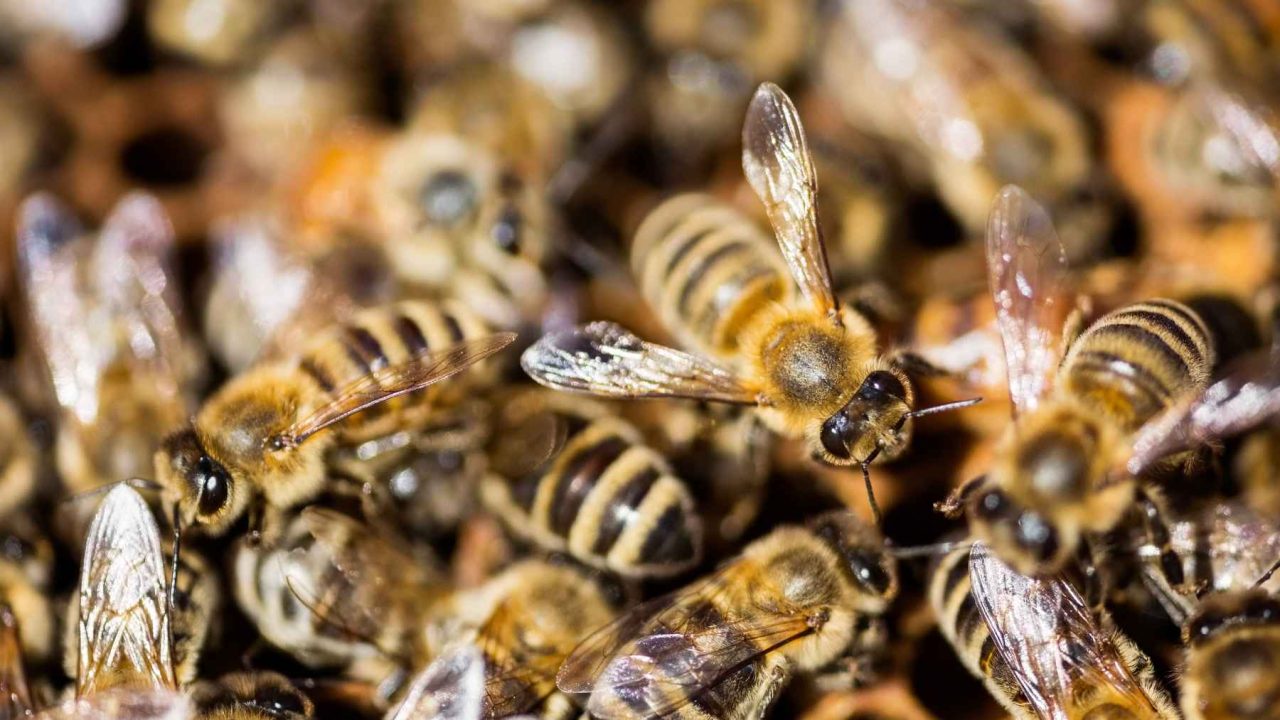
A bee buzzing past you in a city park might be doing something far more useful than pollinating flowers. According to emerging research, the contents of a wild bee’s digestive tract could serve as one of the most accurate environmental health reports a city has ever had — and what scientists are finding inside those tiny guts is challenging some comfortable assumptions about urban green spaces.
The core idea sounds almost poetic: bees, as they forage, absorb microbes, chemical traces, and DNA from the plants, soil, and water they encounter. That information doesn’t just disappear. It travels back into the bee’s body, where it can be read by scientists willing to look closely enough. Researchers are now arguing that this biological data — pulled from the gut of a single wild bee — can reveal how genuinely diverse and healthy a local environment really is.
And the early findings are uncomfortable for anyone who assumed that a park full of green grass and trimmed hedges was doing its job for urban wildlife.
Why Wild Bee Gut DNA Is Becoming an Environmental Tool
Bees have long been recognized as what scientists call “biomonitors” — living creatures whose health and behavior can reflect the condition of the environment around them. Honey bees have been studied in this role for years. But wild bees, which forage more broadly and interact with a wider range of plant species, may offer an even richer picture.
By analyzing the DNA found inside a wild bee’s gut, researchers say they can estimate local plant diversity with a level of detail that traditional ground surveys often miss. A human surveyor walking through a park might note the obvious trees, the flower beds, the grass. A bee’s gut tells a different story — one built from dozens of plant interactions across a foraging range, captured in biological evidence.
The implications go beyond academic curiosity. If a park looks green but the bees foraging in it show low plant diversity in their gut DNA, that is a measurable signal that the space is not functioning as healthy habitat. It may be visually appealing while offering very little to the insects and animals that depend on genuine ecological variety.
The Gap Between Looking Green and Being Green
This is the part of the research that carries the sharpest edge for urban planners and city residents alike. Many urban parks are designed with aesthetics in mind — manicured lawns, ornamental plantings, tidy borders. They read as “nature” to the human eye. But for a wild bee trying to find a diverse range of flowering plants, they can be close to barren.
The gut DNA method offers a way to quantify that gap. Rather than relying on visual assessments or labor-intensive botanical surveys, scientists can collect bees from different urban locations, analyze what plant DNA is present in their digestive systems, and build a comparative picture of which spaces are genuinely supporting biodiversity and which are falling short despite their appearance.
This matters because cities around the world are investing in green infrastructure — parks, green roofs, roadside plantings — partly on the basis that more green space equals better environmental outcomes. The bee gut research suggests that equation is far too simple.
What the Research Is Actually Measuring
The source research notes that bees collect more than pollen as they move through an environment. They pick up microbes and chemical traces from plants, soil, and water, carrying that information into their bodies. Reading the DNA in a bee’s gut therefore provides a kind of composite environmental sample — one that reflects real foraging behavior across a real landscape, not a snapshot taken at a single point by a human observer.
| Method | What It Measures | Limitations |
|---|---|---|
| Traditional park survey | Visible plant species, canopy cover | Misses microscale diversity, observer bias |
| Air quality monitoring | Pollutants, particulate matter | Does not reflect biodiversity or habitat quality |
| Wild bee gut DNA analysis | Plant diversity through foraging behavior | Emerging method, not yet widely standardized |
The University of British Columbia is among the institutions noted in
What This Means for Cities and the People Who Live in Them
For urban residents, this research reframes what it means to have access to green space. A park within walking distance is generally considered a public good — for mental health, for air quality, for connection to nature. That remains true. But if that park is ecologically thin, it may be delivering far less than assumed for the broader environment, including the pollinator populations that food systems depend on.
Wild bees are critical pollinators. Their decline has been documented across many regions, and habitat loss — including the replacement of diverse, flowering landscapes with monoculture lawns and ornamental-only plantings — is considered a significant contributing factor. If gut DNA analysis can help cities identify which green spaces are genuinely supporting wild bee populations and which are not, it becomes a practical tool for making better decisions about where and how to invest in urban nature.
- Urban parks with high visual greenery may score poorly on actual plant diversity
- Wild bee gut DNA can capture foraging data across a wide area, not just a single location
- The method may help distinguish genuinely biodiverse urban spaces from those that only appear healthy
- Bees absorb microbes, chemical traces, and plant DNA as part of normal foraging behavior
Where This Research Goes From Here
The bee gut DNA approach is still developing as a standardized scientific tool. Researchers are working to establish how reliably the method can be applied across different urban environments, different bee species, and different seasons. The goal, broadly, is to give city planners and conservationists a faster, more accurate way to assess environmental health without the cost and time of exhaustive manual surveys.
If the method proves robust at scale, it could reshape how cities evaluate the success of their green infrastructure investments — shifting the measure from how much green space exists to how well that space actually functions for the species that depend on it. For wild bees, and for the ecosystems they support, that distinction could make a significant difference.
Frequently Asked Questions
How does analyzing a bee’s gut reveal information about the environment?
As bees forage, they absorb microbes, chemical traces, and DNA from plants, soil, and water. Scientists can read that biological data from the bee’s digestive tract to estimate local plant diversity and environmental health.
Why are wild bees used instead of honey bees for this kind of monitoring?
Wild bees forage broadly across a range of plant species and environments, potentially offering a richer and more diverse environmental sample than honey bees, which have been more commonly studied as biomonitors.
What does it mean when a park “looks green” but isn’t actually healthy?
A visually green park may be dominated by manicured lawns and ornamental plants that offer very little genuine plant diversity, meaning it provides limited habitat value for wild bees and other wildlife despite its appearance.
Is bee gut DNA analysis already being used by cities?
The method is still emerging and not yet widely standardized. Researchers are working to establish how reliably it can be applied across different urban environments and bee species.
Which institutions are involved in this research?
Why does urban plant diversity matter for wild bees?
Wild bees depend on a range of flowering plants for food and habitat. The loss of diverse plantings in favor of monoculture lawns and ornamental-only gardens is considered a contributing factor to wild bee population declines.


Leave a Reply