
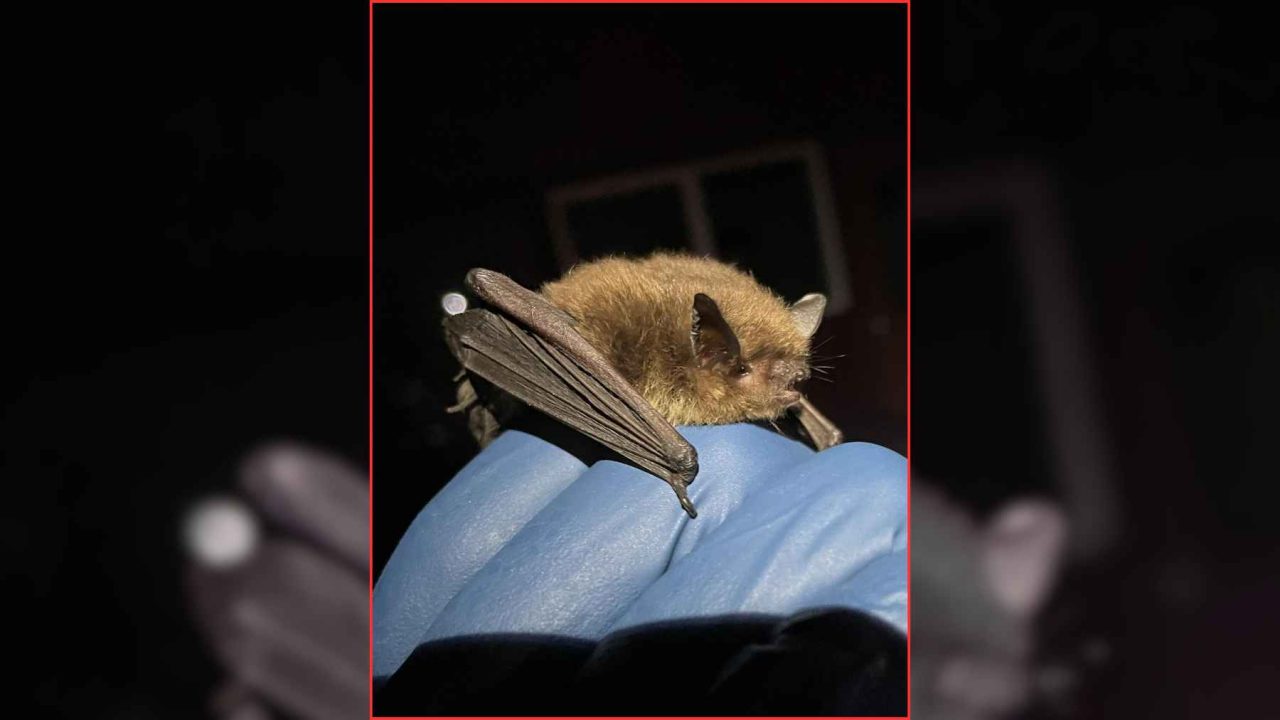
More than 70% of human emerging infectious diseases trace back to animals — and a new scientific study is narrowing down exactly which animals, and which circumstances, carry the greatest risk of sparking the next epidemic. The answer, researchers say, is more specific than most people realize.
Bats have long been cast as the villains of pandemic origin stories. But a new analysis suggests that framing misses the point entirely. The real concern is not bats in general — it is certain bat lineages, in certain places, under certain pressures. And understanding why those pressures are intensifying right now is the part of this story that actually matters.
The study does not predict an imminent outbreak. What it does is map the overlap between high-risk bat groups, disrupted habitats, and human contact — and that map is worth paying attention to.
What the Research Actually Found
The new analysis was led by Caroline A. Cummings, alongside researchers Amanda Vicente-Santos, Colin J. Carlson, and Daniel J. Becker. The team includes scientists from the University of Oklahoma and the Yale University School of Public Health.
Their scope was substantial. The study examined 889 mammal species, including 202 bat species, and looked at 112 virus species drawn from 23 virus families. That breadth is what makes the findings credible — this was not a narrow look at one virus or one region.
To measure risk, the team developed a metric they call “viral epidemic potential.” This score is designed to assess which viruses, carried by which host species, pose the greatest realistic threat of spreading into human populations and causing widespread disease.
The key finding is not that all bats are dangerous. It is that the viruses with the strongest epidemic potential are concentrated in specific bat lineages — not distributed evenly across the roughly 1,400 bat species that exist worldwide. That distinction changes the entire conversation about how to monitor and respond to spillover risk.
Why the Timing Is the Real Story
The science on bat-borne viruses is not entirely new. What is new — and what researchers point to as genuinely alarming — is the context in which these risks are now unfolding.
When habitats are disrupted, bat populations shift. Animals that were once geographically separated from human communities move closer. Stressed wildlife populations can shed viruses at higher rates. And as land use changes accelerate globally, the overlap between high-risk bat lineages and human populations is not staying static — it is growing.
The study does not argue that an outbreak is imminent. But it does point to the places where the conditions are converging: specific bat groups, degraded or fragmented habitats, and increasing human contact. That convergence is the warning.
Researchers note that more than 70% of human emerging infectious diseases are caused by zoonotic pathogens — meaning pathogens that originate in animals and then infect people. Bats are not the only reservoir, but they are a significant one, and the new scoring system helps prioritize where surveillance resources should be focused.
Breaking Down the Study’s Scope
Here is a clearer picture of what the research team examined:
| Category | Number Examined |
|---|---|
| Total mammal species studied | 889 |
| Bat species included | 202 |
| Virus species analyzed | 112 |
| Virus families represented | 23 |
The research institutions involved — the University of Oklahoma and the Yale University School of Public Health — bring significant credibility to the methodology. The team’s use of a standardized “viral epidemic potential” score is also notable because it gives public health officials a consistent tool for comparing risk across very different species and virus types.
What This Means for People Who Are Not Scientists
For most readers, the practical question is simple: should I be worried?
The honest answer is that this study is a monitoring and prioritization tool, not a warning siren. It does not identify a specific bat species that is about to cause a human epidemic. What it does is give scientists and public health agencies a clearer framework for deciding where to look — and that kind of early intelligence is exactly what was missing before previous outbreaks reached the scale they did.
- Not all bats carry equal viral risk — specific lineages are the focus
- Habitat disruption increases the likelihood of human-animal contact with high-risk species
- Zoonotic diseases — those jumping from animals to humans — account for more than 70% of emerging human infectious diseases
- The study’s “viral epidemic potential” score is designed to help prioritize surveillance, not predict specific outbreaks
- Researchers from the University of Oklahoma and Yale University School of Public Health contributed to the analysis
The concern is not that bats are uniquely dangerous animals to be avoided or feared. It is that human activity is changing the conditions under which viruses that have existed in wildlife for centuries suddenly find new pathways into human populations.
Where the Science Goes From Here
The development of a standardized “viral epidemic potential” metric is itself a step forward. If the scientific community adopts and refines this scoring system, it could become a routine part of wildlife disease surveillance — the same way seismic monitoring helps geologists track fault line activity before an earthquake strikes.
The next logical steps would involve expanding the dataset, testing the predictive accuracy of the scoring system against historical outbreak data, and applying the framework to guide real-time monitoring in regions where high-risk bat lineages and human populations already overlap significantly.
None of that work is complete yet. But the foundation — a large, multi-species, multi-virus analysis with a consistent scoring methodology — is now in place. For a field that has often been reactive rather than proactive, that is a meaningful shift.
Frequently Asked Questions
Does this study identify a specific bat species that will cause the next epidemic?
No. The study identifies that epidemic risk is concentrated in certain bat lineages, but it does not name a single species or predict a specific outbreak.
Who conducted this research?
The study was led by Caroline A. Cummings, with co-researchers Amanda Vicente-Santos, Colin J. Carlson, and Daniel J. Becker, representing the University of Oklahoma and the Yale University School of Public Health.
What does “viral epidemic potential” mean?
It is a scoring metric developed by the research team to measure how likely a given virus, carried by a specific host species, is to spread into human populations and cause widespread disease.
How many species did the study examine?
The team examined 889 mammal species — including 202 bat species — and analyzed 112 virus species from 23 virus families.
Why are bats specifically a concern for zoonotic disease?
Bats are one of the most significant animal reservoirs for viruses that can infect humans. The study notes that more than 70% of human emerging infectious diseases are caused by zoonotic pathogens that originate in animals.
Is an outbreak currently happening or imminent?
No. The study explicitly does not warn that an outbreak is about to begin — it is a risk-mapping and surveillance prioritization tool, not an emergency alert.




Leave a Reply