
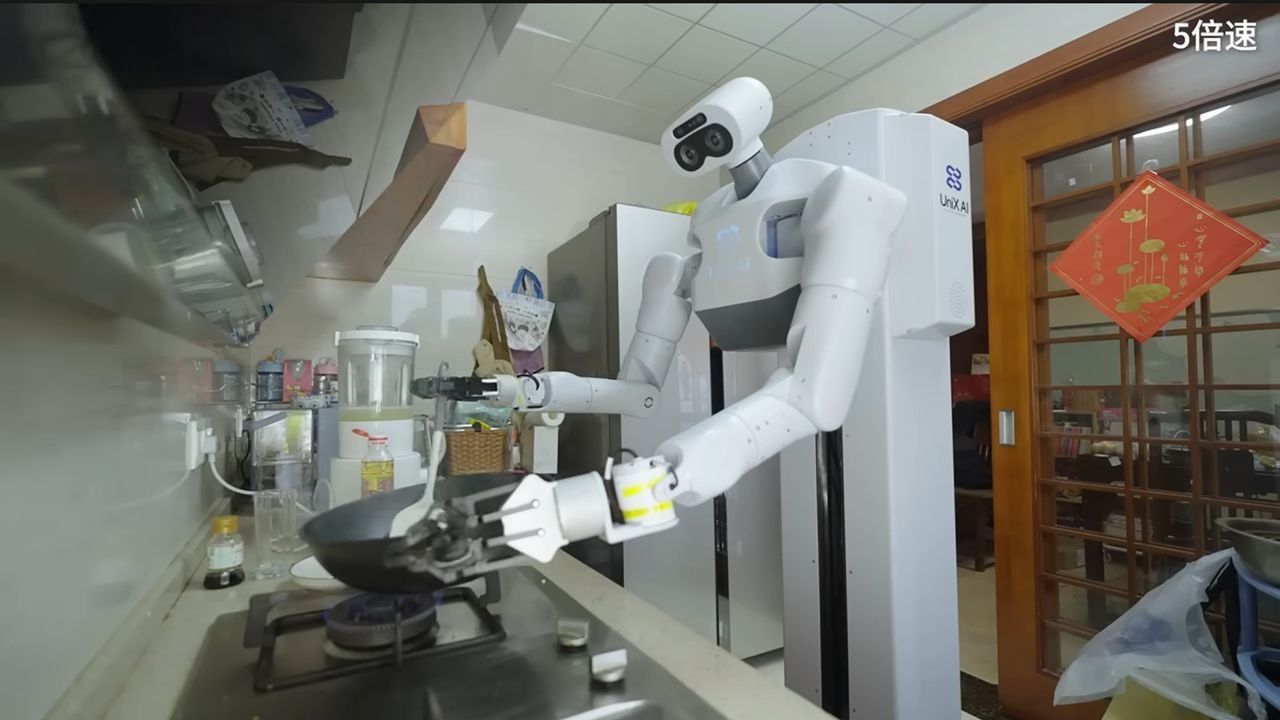
What if the most dreaded part of your week — the cooking, the cleaning, the endless cycle of household chores — could be handed off to a robot standing in your kitchen? That’s no longer a science fiction premise. Chinese robotics company UniX AI has announced the release of a humanoid service robot called Panther, and its engineers say it’s ready to move into your home.
Panther stands 5 feet, 3 inches tall (1.6 meters) and weighs 176 pounds (80 kilograms). It can run for up to 12 hours on a single charge — enough to handle a full day of household tasks before needing to power down. UniX AI has released a promotional video showing the robot operating in a kitchen environment, including cooking breakfast.
The announcement has drawn significant attention from the robotics and tech communities. Humanoid home robots have been a long-promised concept, but getting them to work reliably in real domestic environments — with all the unpredictability that comes with everyday life — has proven far harder than building them to work in controlled factory settings.
Meet Panther: What This Humanoid Robot Is Actually Built to Do
Panther is designed specifically as a humanoid service robot — meaning it’s built in a human-like form to navigate spaces and handle tasks that were designed for human bodies. Kitchens, living rooms, and hallways weren’t built with wheeled machines in mind. A robot with arms, legs, and roughly human proportions can theoretically move through those spaces more naturally than earlier generations of home automation devices.
UniX AI’s promotional footage shows Panther performing kitchen tasks, including preparing breakfast. The company has positioned the robot as a practical domestic assistant rather than a research prototype or industrial tool. According to their announcement, the engineers believe it is ready for home deployment — a bold claim given where the broader field of humanoid robotics currently stands.
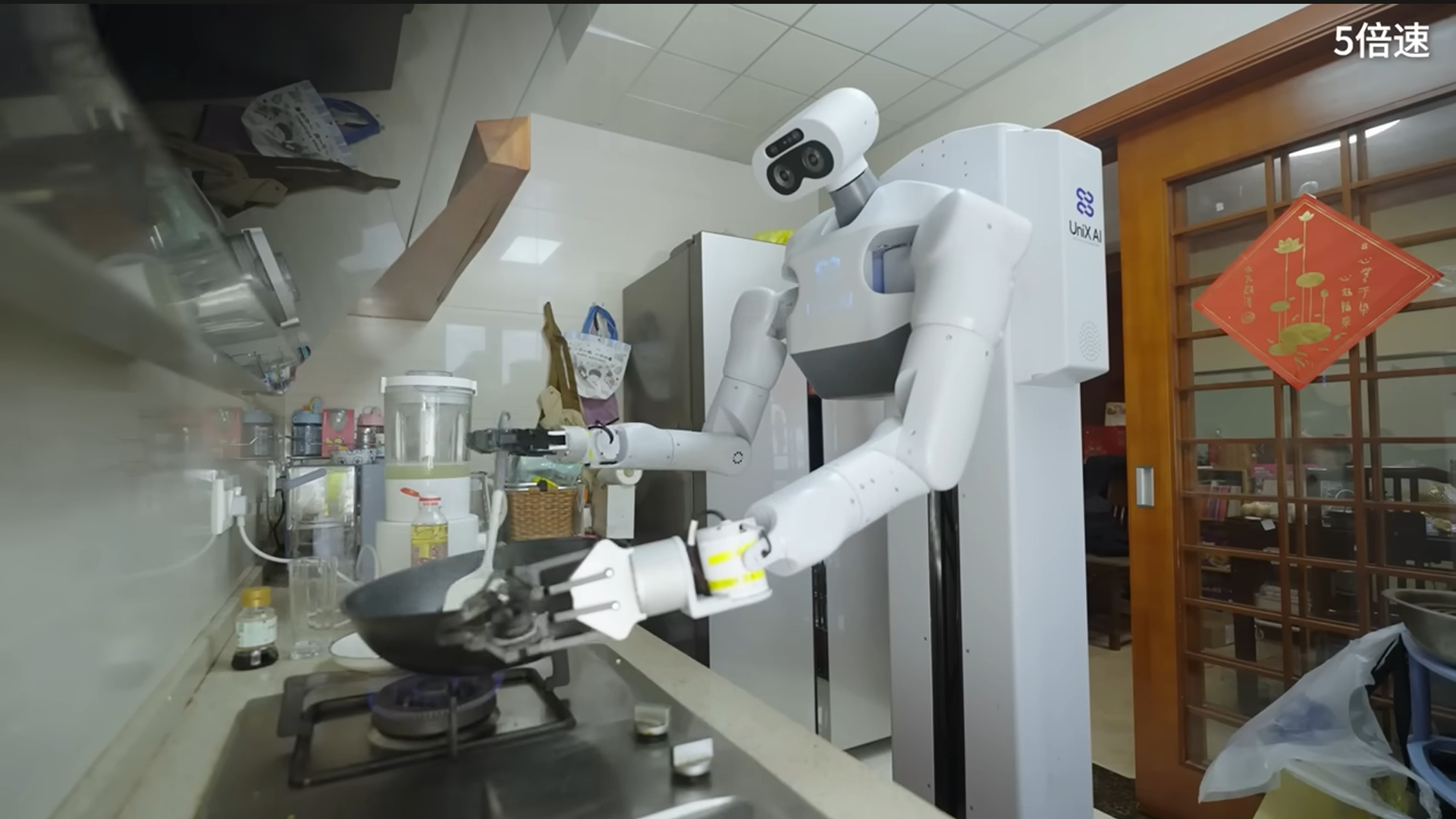
The 12-hour battery life is one of the robot’s most practically significant specifications. Many competing humanoid robots have struggled with operating time, limiting their usefulness in real-world settings. A full working day of battery capacity would, in theory, allow Panther to handle chores throughout the morning and afternoon without interruption.
The Key Specs at a Glance
Here’s what UniX AI has confirmed about Panther’s physical and operational specifications:
| Specification | Detail |
|---|---|
| Height | 5 feet, 3 inches (1.6 meters) |
| Weight | 176 pounds (80 kilograms) |
| Battery Life | Up to 12 hours per charge |
| Primary Use | Household service tasks |
| Demonstrated Capability | Cooking breakfast (per promotional video) |
| Manufacturer | UniX AI (China) |
- Panther is designed to operate in standard home environments
- The robot’s humanoid form is intended to allow it to use spaces and tools built for humans
- UniX AI has stated the robot is ready for home use, according to its engineering team
- A promotional video demonstrating kitchen operation has been publicly released
Why the “Ready for Your Home” Claim Is Worth Examining
The robotics industry has a complicated history with bold announcements. Humanoid robots have been demonstrated performing impressive tasks in controlled settings for years — and then quietly disappeared from consumer markets. The gap between a polished promotional video and a robot that can reliably handle the chaos of a real home is significant.
Real kitchens involve spills, unexpected objects, varying lighting, and surfaces that don’t behave the way a test environment does. Observers in the robotics field have consistently noted that domestic environments are among the most challenging settings for autonomous robots, precisely because they’re so unpredictable.
That said, the pace of development in humanoid robotics has accelerated sharply in recent years. Several well-funded companies — particularly in China and the United States — have made meaningful progress in dexterity, navigation, and task learning. UniX AI’s Panther enters a field that is genuinely moving faster than it was even three years ago.
Whether Panther lives up to its makers’ claims will ultimately depend on real-world performance data that hasn’t yet been independently verified. The announcement and video represent what the company wants the public to see — thorough, independent testing in actual homes would tell a more complete story.
What This Means for Anyone Thinking About a Home Robot
For consumers, the arrival of announcements like Panther’s signals that the household robot market is heating up. Chinese robotics companies have been investing heavily in humanoid development, and competition in this space is intensifying. That’s generally good news for future pricing and capability — even if the first wave of products comes with a premium price tag and real limitations.
A robot that weighs 176 pounds is also worth thinking about practically. That’s a substantial piece of machinery moving through a home, potentially around children, elderly family members, or pets. Safety, reliability, and ease of use will matter as much as the headline capabilities when real families start evaluating whether something like Panther belongs in their homes.
Pricing and availability details for Panther have not been confirmed in the available information, so prospective buyers will need to wait for further announcements from UniX AI on those fronts.
What Comes Next for UniX AI and Panther
UniX AI has made its intentions clear: Panther is positioned as a product ready for home deployment, not a research project or a years-away concept. Whether that translates into actual consumer availability in the near term remains to be seen.
The broader humanoid robotics sector is watching closely. If Panther performs reliably in domestic settings, it could push competitors to accelerate their own timelines. If it falls short of its makers’ claims, it will add to the long list of cautionary tales about over-promising in this field.
Either way, the conversation about robots handling household chores has moved from theoretical to tangible. The question is no longer whether humanoid home robots will exist — it’s whether they’ll work well enough for ordinary people to actually want one.
Frequently Asked Questions
What is the Panther robot?
Panther is a humanoid service robot developed by Chinese company UniX AI, designed to perform common household tasks including cooking.
How long does Panther’s battery last?
According to UniX AI’s engineers, Panther can operate for up to 12 hours on a single charge.
How big is the Panther robot?
Panther stands 5 feet, 3 inches tall (1.6 meters) and weighs 176 pounds (80 kilograms).
What household tasks can Panther perform?
UniX AI has demonstrated Panther cooking breakfast in a kitchen environment. The company says it is designed to help with common household chores, though the full range of confirmed capabilities has not been detailed in available source material.
How much does Panther cost and when can I buy it?
Pricing and consumer availability details have not yet been confirmed based on current available information.
Is Panther actually ready for home use?
UniX AI’s engineers have stated that Panther is ready for home deployment, though independent real-world testing and verification have not yet been publicly reported.



Leave a Reply