
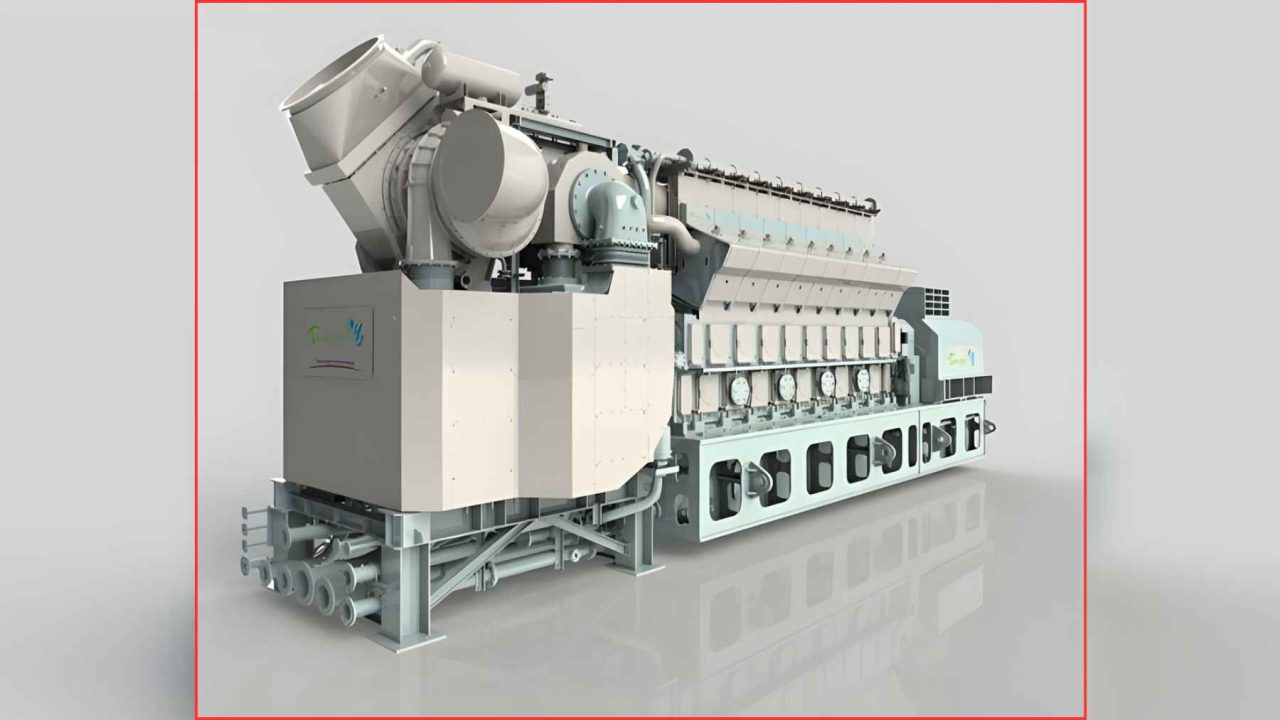
What if you could cut the carbon emissions from your power plant without replacing a single pipe, tank, or major piece of infrastructure? That is exactly what Kawasaki Heavy Industries is betting on — and in 2026, the company is turning that bet into a commercial product available for order.
Japan’s industrial giant has unveiled what is being described as the world’s first commercial large gas engine capable of generating electricity using a fuel mixture containing up to 30% hydrogen by volume blended with natural gas. The engine sits in the eight megawatt class, designed for distributed power plants, and it is built on Kawasaki’s established KG series platform.
This is not a concept or a prototype. Kawasaki opened its order book in late 2025, following nearly a year of real-world operational testing — not just laboratory trials. The timing matters: as governments and industries worldwide race to decarbonize, this engine offers a path that does not require tearing everything down and starting over.
What Kawasaki’s Hydrogen-Ready Engine Actually Does
The core idea behind this technology is deceptively simple: blend hydrogen into the natural gas supply, feed that mixture into a modified engine, and generate electricity with fewer carbon dioxide emissions per kilowatt hour. The appeal is that existing gas infrastructure — pipes, storage, distribution networks — can largely remain in place.
That “without changing the pipes” promise is a significant selling point for plant operators. Energy transitions are expensive. Every piece of equipment that does not need replacing is money saved and downtime avoided. Kawasaki’s design reflects what engineers describe as a transition mindset — giving operators a cleaner option without forcing them to scrap equipment that still functions.
The engine is rated for the eight megawatt class, which places it squarely in the distributed power generation market. These are the kinds of units that serve industrial facilities, large commercial campuses, and municipal power systems — places where reliability and cost predictability matter enormously.
Eleven Months of Real-World Testing in Kobe
Before a single commercial order was accepted, Kawasaki ran an eleven-month operational trial at its Kobe works facility. That trial began in October 2024 and was specifically designed to observe how the system performed under real operating conditions rather than controlled laboratory settings.
This distinction matters more than it might seem. Lab results can be optimized, variables can be controlled, and outcomes can be curated. An eleven-month run at an actual industrial site exposes a machine to the full range of load fluctuations, temperature changes, fuel supply variations, and maintenance demands that any buyer would actually face.
The fact that Kawasaki waited for those results before opening the order book signals a level of confidence — and commercial caution — that will likely reassure potential buyers who have seen too many “revolutionary” clean energy products fall apart in deployment.
Key Specifications and What the Product Offers
| Feature | Detail |
|---|---|
| Hydrogen blend capacity | Up to 30% hydrogen by volume |
| Power class | Eight megawatt class |
| Platform base | Kawasaki KG series |
| Testing location | Kobe works facility, Japan |
| Testing duration | Eleven months (began October 2024) |
| Order book opened | Late 2025 |
| Commercial availability | 2026 |
| Warranty | Included |
| Upgrade option | Available |
Two features stand out beyond the technical specs. First, the engine comes with a warranty — a standard commercial assurance that carries real weight when you are talking about an eight megawatt industrial system. Second, buyers are offered an upgrade option, which suggests Kawasaki is building a roadmap toward higher hydrogen concentrations as the technology and fuel supply infrastructure mature.
Why This Matters for the Broader Energy Transition
For many industrial operators, the energy transition presents a frustrating dilemma. Fully electric alternatives often require massive infrastructure overhauls. Pure hydrogen systems face supply chain and storage challenges that remain unresolved in most markets. The 30% hydrogen blend approach tries to thread that needle.
By keeping the fuel delivery infrastructure largely intact, operators can begin reducing emissions today while the broader hydrogen economy catches up. Advocates of this approach argue that incremental decarbonization — achieved without stranding existing assets — is more likely to be adopted at scale than solutions that demand complete system replacement.
The distributed power generation sector is particularly relevant here. These are not massive centralized power stations; they are the engines that keep factories running, hospitals powered, and industrial processes humming. Getting cleaner fuel into those systems, without shutting them down for expensive retrofits, could have a meaningful cumulative impact on industrial carbon emissions.
What Happens Next for This Technology
With orders now open and commercial availability confirmed for 2026, the immediate next step is deployment. The upgrade option built into the product suggests Kawasaki anticipates a longer product lifecycle — one in which the hydrogen blend percentage may increase as fuel availability improves and regulatory pressures intensify.
Japan’s energy sector has been particularly aggressive in pursuing hydrogen as a transition fuel, and Kawasaki’s move positions the company as a first mover in what could become a significant global market. Whether other manufacturers follow with competing products at similar or higher hydrogen blend ratios remains to be seen.
For plant operators evaluating their decarbonization options, the combination of proven real-world testing, commercial warranty coverage, and the ability to upgrade without full replacement makes this worth watching closely as 2026 unfolds.
Frequently Asked Questions
What is the maximum hydrogen blend this engine can handle?
The engine is designed to operate with a fuel mixture containing up to 30% hydrogen by volume blended with natural gas.
Where was the engine tested before going on sale?
Kawasaki conducted an eleven-month operational trial at its Kobe works facility in Japan, beginning in October 2024.
Do buyers need to replace their existing gas pipes or tanks?
According to Kawasaki’s design premise, the engine is intended to work with existing gas infrastructure, avoiding the need to replace pipes or storage systems.
Does the engine come with a warranty?
Yes, the commercial product includes a warranty, and buyers are also offered an upgrade option for future improvements.
When did Kawasaki open orders, and when will the engine be commercially available?
The order book opened in late 2025, with commercial availability confirmed for 2026.
Will the engine be able to handle higher hydrogen concentrations in the future?
The inclusion of an upgrade option suggests Kawasaki is planning for higher hydrogen blends over time, though specific future targets have not been confirmed in available reports.


Leave a Reply