
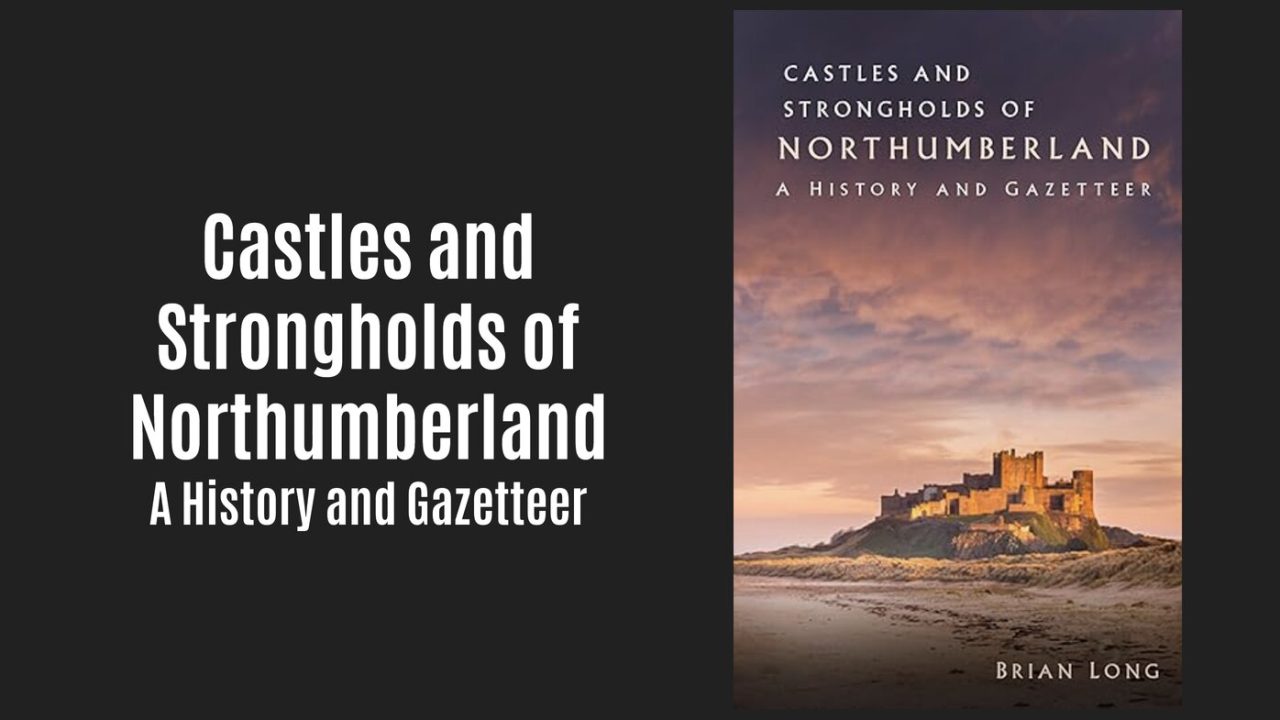
Northumberland holds a record that most people outside England’s northeast have never heard of: it contains more castles, fortalices, towers, peles, bastles, and barmkins than any other county in the British Isles. Not just England. The entire British Isles. That single fact tells you something profound about the centuries of conflict, raiding, and hard-edged survival that shaped this corner of the country.
A newly expanded edition of Castles and Strongholds of Northumberland: A History and Gazetteer by Brian Long, published by The History Press, brings that story into sharp focus. With over 500 entries, it is the most thorough guide to the region’s fortified heritage ever compiled — and a serious resource for anyone planning to explore one of England’s most historically layered landscapes.
The book’s roots go back to 1967, when the first edition appeared. This latest revision dramatically expands its scope, covering everything from the grand stone keeps that kings called home to the rougher, smaller structures where farmers barricaded their livestock against raiders. It is a long time coming, and the result is something genuinely useful.
Why Northumberland Has More Castles Than Anywhere Else in the British Isles
The sheer density of fortified buildings in Northumberland is not an accident of history — it is the direct product of it. For centuries, this was frontier territory. The county sits at England’s northernmost edge, and the border with Scotland was never a peaceful line on a map. It was a zone of constant tension, periodic warfare, and persistent raiding.
The book draws a careful distinction between the different types of fortified structures that emerged from this environment. Castles, in the traditional sense, were private residences and fortresses belonging to kings and noblemen. That private character is what separates them from the Anglo-Saxon burghs that came before — places like Heddon, Yeavering, and Bamburgh, which were fortified towns rather than individual strongholds.
The towers, peles, bastles, and barmkins served a different social tier. These were the defences of smaller lords, wealthy farmers, and landowners who needed to protect themselves and their livestock from raiding parties. They were not symbols of royal power. They were practical solutions to a very real and recurring threat.
What the Different Fortifications Actually Mean
One of the most useful things this book does is clarify terminology that can confuse even dedicated history enthusiasts. The vocabulary of Northumberland’s defensive architecture is specific, and each term refers to a distinct type of structure with its own social and military context.
| Structure Type | Description | Who Built Them |
|---|---|---|
| Castle | Private residence and fortress of significant scale | Kings and noblemen |
| Fortalice | A smaller fortified structure or minor fortress | Lesser lords and landowners |
| Tower / Pele Tower | Tall, defensible stone tower, often a fortified residence | Small lords and wealthy landowners |
| Bastle | Fortified farmhouse, usually with livestock on the ground floor | Farmers and rural landowners |
| Barmkin | An enclosed courtyard or defensive enclosure, often attached to a tower | Landowners seeking to secure livestock |
Understanding these distinctions changes how you look at the landscape. What might appear to be a crumbling farm building could be a bastle house — a structure specifically designed so that cattle sheltered on the ground floor while the family slept above, behind thick stone walls, with a ladder they could pull up behind them.
Who This Book Is Actually For
The guide covers entries ranging from a couple of sentences to several pages, depending on the significance and surviving evidence for each site. That range makes it genuinely versatile. A reader doing a quick day trip can get the essentials; a serious researcher or local historian can find material substantial enough to anchor deeper investigation.
The book is described as an invaluable resource for anyone interested in Northumberland’s local history. That is not marketing language — it reflects the straightforward reality of what a 500-plus entry gazetteer represents. No comparable single volume covers this ground with the same breadth.
- Over 500 individual entries covering castles and fortified historic buildings
- Covers England’s northernmost county in full
- First edition published in 1967; this latest revision greatly expands the original scope
- Published by The History Press (ISBN: 978 0 7509 9409 5)
- Entries range from brief descriptions to multi-page treatments
What a Visit to Northumberland’s Castle Country Actually Looks Like
For travellers, the northeast corner of England offers something that is genuinely difficult to find elsewhere in Britain: a density of medieval and early modern defensive architecture spread across open, often dramatic countryside. This is not a region where you have to work hard to find history. It is embedded in the landscape at almost every turn.
The book functions as a practical companion for that kind of exploration. Whether you are tracing the remains of a pele tower in a field, visiting a well-preserved castle open to the public, or simply trying to make sense of a ruined wall in a farmyard, having a guide that identifies and contextualises over 500 sites gives any visit a different quality of depth.
The distinction between structures built for royal and noble power versus those built by farmers defending their cattle also gives travellers a more honest picture of medieval and early modern life in the region. Northumberland’s defensive heritage is not just about grand fortresses. It is about a society that lived under persistent threat and adapted accordingly — in stone, at every level of the social order.
Frequently Asked Questions
How many entries does the new edition of Castles and Strongholds of Northumberland contain?
The latest revised edition contains over 500 entries covering castles and other fortified historic buildings across Northumberland.
When was the first edition of this book published?
The first edition appeared in 1967. The latest revision significantly expands on that original work.
What is the difference between a pele tower and a bastle?
Based on the book’s framework, pele towers were fortified residential towers built by small lords and landowners, while bastles were fortified farmhouses used by farmers to protect themselves and secure their livestock during raids.
Why does Northumberland have more castles than any other county in the British Isles?
The book points to Northumberland’s position as England’s northernmost county and its long history as a frontier zone, which created persistent demand for private fortification at every level of society.
Who is the author and publisher of this book?
The book is written by Brian Long and published by The History Press, with ISBN 978 0 7509 9409 5.
Is this book useful for casual visitors or only serious historians?
The guide is designed to serve both audiences, with entries ranging from brief summaries to multi-page treatments depending on the site — making it practical for day-trippers and researchers alike.



Leave a Reply