
Hundreds of sea-level studies may have been built on a flawed foundation — and the correction is not a rounding error. A new analysis has found that many coastal risk assessments used the wrong baseline for measuring where the ocean actually sits, meaning that maps covering roughly half the world’s coastlines could be showing land as safer than it really is.
This is not a story about the sea rising faster than expected this week. It is a story about a measurement problem that has quietly been embedded in the science for years — and what fixing it could mean for millions of people who live near the water.
The core issue comes down to something most people never think about: the invisible line researchers use to define where sea level begins.
The “Zero Line” That Was Set in the Wrong Place
Every coastal flood map depends on two basic measurements. How high is the land? And how high is the water sitting next to it? Get either one wrong, and the entire risk picture shifts.
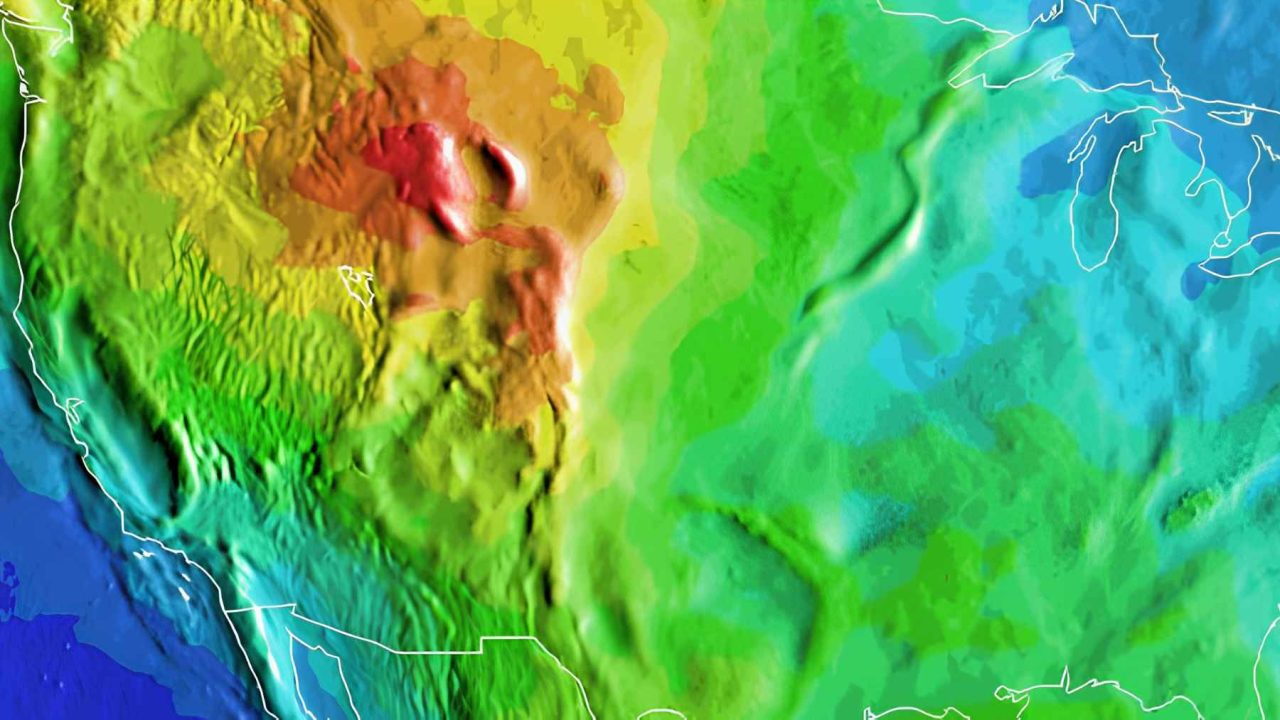
In many of the studies now under scrutiny, researchers used a global gravity-based model — known as a geoid — as a stand-in for the local sea surface. A geoid is a smooth, mathematically derived shape that reflects Earth’s gravity and rotation. It is a useful scientific tool, but it does not represent what the ocean actually looks like at any specific shoreline.
Real coastlines are far messier. Winds push water in one direction. Ocean currents pile water up in certain regions. Tides, water temperature, and saltiness all cause local sea levels to deviate from what the geoid predicts. In practical terms, the actual ocean surface outside a fishing village, a port city, or a low-lying island may sit noticeably higher or lower than the global model suggests.
When researchers treat the geoid as if it equals local sea level, they are starting from the wrong “zero.” And if your zero is off, everything measured above or below it is off too.
Why This Error Spread Through So Many Studies
The geoid is widely used in science precisely because it is consistent and globally available. For many purposes, it is an excellent reference. But coastal flood risk assessment is not one of those purposes — at least not without careful adjustment for local conditions.
The problem is that making those local adjustments requires tide gauge data, oceanographic records, and careful calibration work that is time-consuming and not always available for every stretch of coastline. In areas where detailed local data is scarce, researchers often defaulted to the global model, and the error quietly compounded across study after study.
The result, according to the new analysis, is that more land — and more people — may already sit closer to today’s sea level than earlier maps indicated. The risk has not suddenly increased. It was always there. The maps just were not capturing it accurately.
What the Sea-Level Baseline Error Actually Means
| Concept | What Studies Used | What Should Be Used |
|---|---|---|
| Sea-level baseline | Global geoid model | Local observed sea surface |
| Accounts for wind and currents | No | Yes |
| Accounts for water temperature and salinity | No | Yes |
| Consistent across all regions | Yes | Varies by location |
| Reflects actual shoreline conditions | Not reliably | Yes |
The table above captures why the shortcut was appealing and why it introduced error. Consistency is useful for global comparisons. But consistency built on a model that does not reflect local ocean behavior produces maps that look precise while quietly understating risk in specific places.
Which Coastlines Face the Biggest Reassessment
The analysis suggests that coastal risk maps across roughly half the world could need revision. That is a significant geographic scope, though the degree of correction will vary considerably from place to place.
Some regions will see relatively minor adjustments. Others — particularly areas where local sea level diverges substantially from the global geoid, such as certain tropical coastlines, island communities, and areas with strong regional ocean currents — could see more meaningful changes to their flood exposure estimates.
- Low-lying coastal communities that were previously mapped as being above flood thresholds may fall within risk zones under corrected baselines.
- Ports and fishing towns where the actual sea surface sits higher than the geoid predicts are among the most likely to be affected.
- Island communities that rely on global sea-level models for planning decisions face some of the greatest uncertainty until local recalibration is complete.
- Infrastructure assessments — roads, drainage systems, seawalls — that were designed based on flawed baselines may need engineering review.
Analysts note that this is not a uniform upward revision everywhere. In some locations, local sea level may actually sit below the geoid, which would shift the risk picture in the other direction. The key point is that the global model was treated as locally accurate when it was not, in either direction.
What Needs to Happen Now
Correcting the record will not be quick or simple. It requires going back through the affected studies, identifying which ones used the geoid as a direct sea-surface proxy, and recalculating flood exposure using local tide gauge data and oceanographic observations wherever those records exist.
For coastlines where local data is sparse — which includes many of the world’s most vulnerable communities in developing regions — the correction process will be harder. Researchers will need to either gather new observational data or use improved regional ocean models to estimate local sea-surface conditions more accurately than the global geoid allows.
The practical downstream effect is that flood zone designations, building codes, insurance risk models, and government adaptation plans in affected areas may all need to be revisited. That is a substantial undertaking, but analysts argue it is a necessary one — because policy built on a flawed baseline is, at best, planning for a problem that does not quite match reality.
Frequently Asked Questions
What is a geoid, and why was it used in sea-level studies?
A geoid is a global model of Earth’s surface based on gravity and rotation. It was widely used in coastal studies because it is consistent and globally available, even though it does not always reflect actual local sea-surface conditions.
Does this mean sea levels are rising faster than we thought?
No. The issue is not the rate of sea-level rise but the baseline from which measurements were taken. More land may be closer to current sea level than maps showed, not because the ocean rose faster, but because the starting reference was set incorrectly.
How many studies are affected?
The analysis found errors across hundreds of sea-level studies, with potential implications for coastal risk maps covering roughly half the world’s coastlines.
Will flood maps be redrawn immediately?
Recalculating flood exposure requires local tide gauge data and oceanographic records, which takes time. A full revision of affected maps is not expected to happen quickly, particularly in regions where local data is limited.
Are some regions more affected than others?
Yes. Areas where local sea level diverges most from the global geoid — including certain tropical coastlines, island communities, and regions with strong ocean currents — are likely to see the most significant corrections.
What should people in coastal areas do with this information?
This has not yet resulted in updated official flood zone maps, so specific local guidance is not yet available. Residents in low-lying coastal areas may want to follow updates from their local environmental and planning authorities as the recalibration work progresses.



Leave a Reply