
Air conditioners and fans already consume roughly 10% of all electricity used worldwide, according to the International Energy Agency — and that number is climbing fast as summers grow hotter and more people around the globe reach for a thermostat. So when a hobbyist in Florida builds a small cooling system that sidesteps the grid entirely during peak heat hours, it’s worth paying attention.
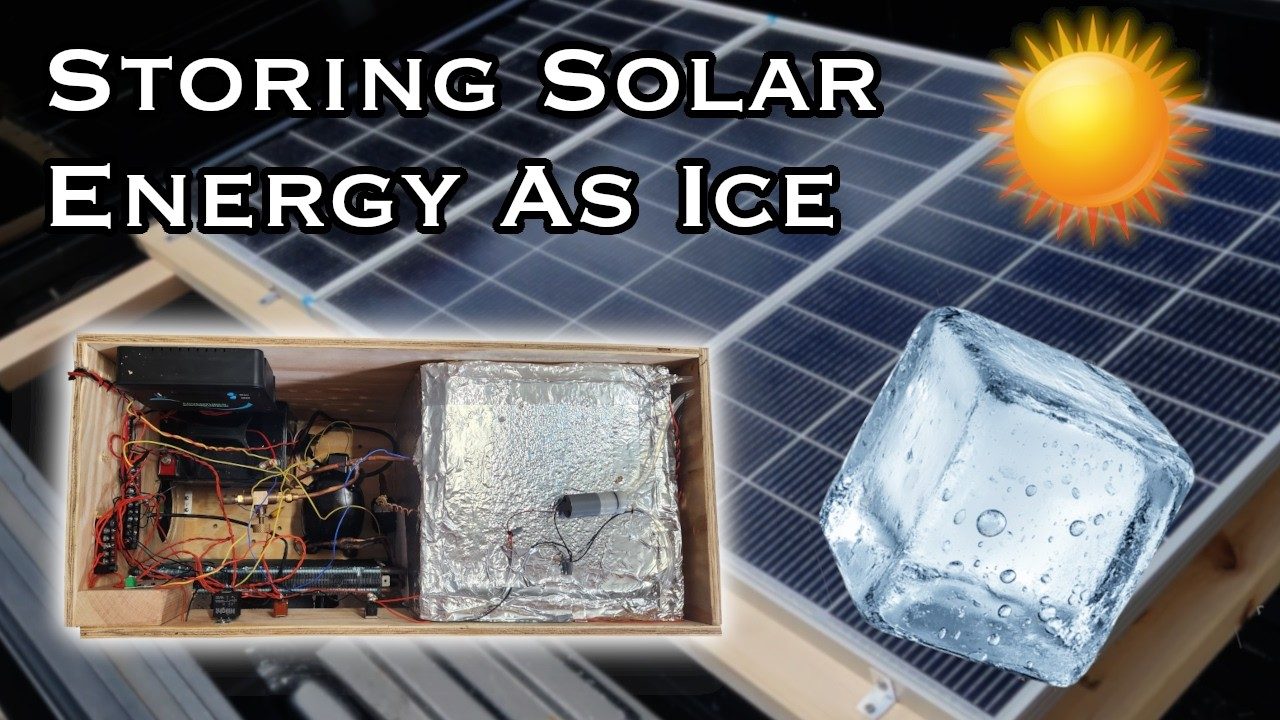
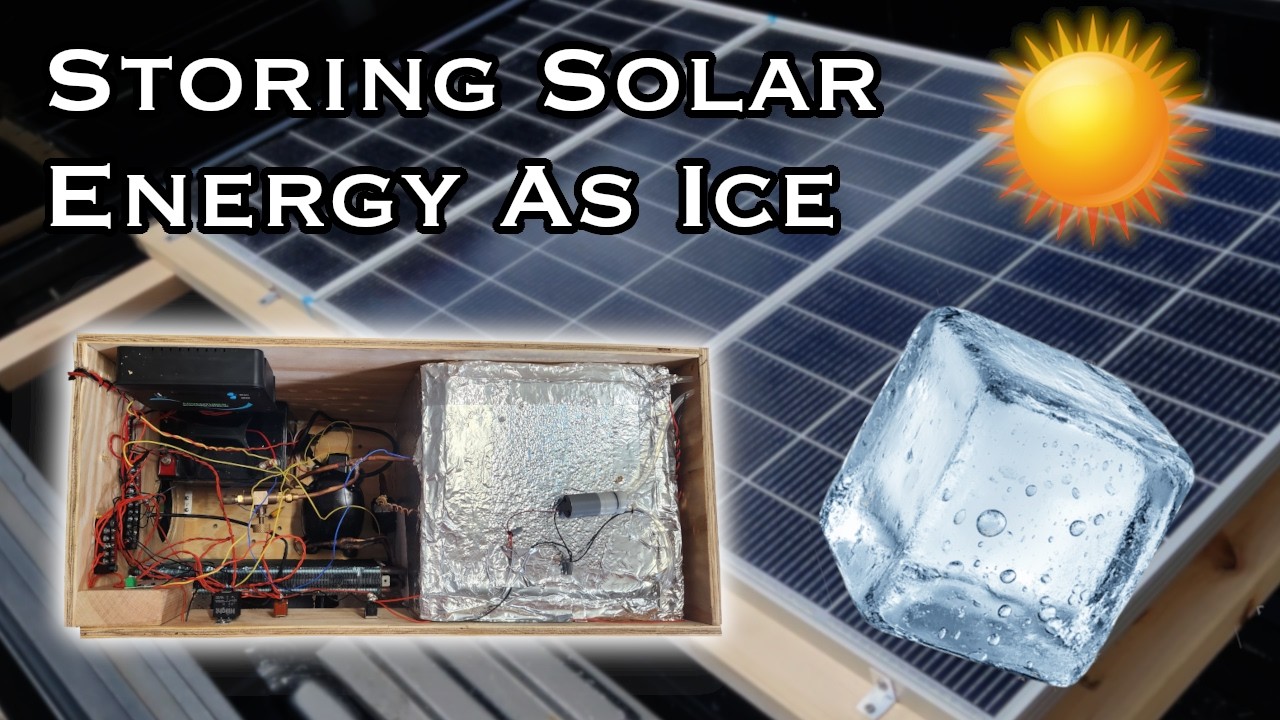
The setup is surprisingly straightforward: use solar panels to freeze water during daylight hours, then use that ice as a stored reservoir of cold — a so-called thermal battery — to cool a small space later, without drawing any power from the electrical grid at that moment. It sounds almost too simple. That’s part of what makes it interesting.
The prototype isn’t ready to replace your central air unit. But the concept it demonstrates is one that energy researchers and engineers have been circling for years, and seeing it built in someone’s garage in Florida gives it a new kind of tangibility.
How the Solar-Powered Ice Cooler Actually Works
At its core, the system behaves like a small refrigerator that knows when to do its work. During the day, when solar panels are generating power, the system runs its compressor and freezes water stored in an insulated tank. That frozen water doesn’t do anything immediately — it just sits there, holding cold the way a battery holds charge.
Later, when the sun goes down or when cooling is needed most, a second loop circulates a water-glycol mixture around the ice. That chilled fluid then feeds into a fan unit, which pushes cool air into the space. The grid isn’t involved at that point. The “electricity” was already spent making the ice — the cooling itself runs on stored thermal energy.
The components involved, according to That’s another point in the concept’s favor — this isn’t cutting-edge laboratory hardware. It’s the kind of equipment a motivated hobbyist can source and assemble.
The Numbers Behind Why This Matters
The scale of global cooling demand makes even partial, off-grid solutions worth exploring seriously. The International Energy Agency’s figure — that cooling equipment accounts for about 10% of global electricity consumption — translates into an enormous strain on power grids, especially during summer afternoons when demand peaks and utilities struggle to keep up.
| Component | Role in the System |
|---|---|
| 3 × 100-watt solar panels | Generate daytime power to run the compressor |
| Compact compressor | Freezes water during solar hours |
| Insulated tank | Stores ice as a thermal battery |
| Water-glycol loop | Circulates cold from ice to the fan unit |
| Fan | Distributes cooled air into the space |
| Small battery + inverter | Manages electrical flow within the system |
The thermal battery concept — storing cold rather than electricity — is appealing precisely because ice is cheap, dense with stored energy, and doesn’t degrade the way lithium batteries do over charge cycles. Advocates of the approach argue it could complement or even partially replace conventional battery storage in certain climates.
What “Works Without Electricity” Actually Means Here
The phrasing deserves a honest look. The system does use electricity — but it uses it strategically, converting solar power into frozen water during the hours when panels are producing. When the cooling actually happens, the compressor isn’t running. The fan and pump require minimal power compared to a full compressor cycle.
Think of it less as “no electricity” and more as shifted electricity. The energy cost happens at noon; the cooling benefit arrives at six in the evening. For homeowners in places like Florida, where utility rates spike during peak afternoon and evening hours, that time-shift alone could translate into meaningful savings — even if the system is only handling a portion of the cooling load.
Critics would rightly note that the prototype cools a small space, not a full home. The insulated tank, the amount of ice it can produce, and the capacity of the fan all impose real limits. Scaling this up to handle a three-bedroom house in July heat is a different engineering challenge entirely.
Why Florida Is the Right Place to Test This
Florida’s climate makes it an almost ideal test environment for solar-based cooling concepts. The state gets abundant sunshine — exactly what charges the system — while simultaneously being one of the hottest and most humidity-challenged places in the continental United States. Residents there face some of the highest cooling costs in the country, and summer electric bills can be punishing.
The convergence of high solar availability and high cooling demand is precisely the condition under which thermal battery cooling makes the most practical sense. The sun does the hard work during the day; the stored cold does the work when it’s actually needed.
Energy observers note that as hot weather, rising cooling demand, and painful electric bills collide in more parts of the world, solutions that shift or reduce peak grid load — even small, hobbyist-built ones — point toward approaches worth scaling. The Florida prototype may be modest, but the principle it demonstrates is not.
Where This Concept Could Go Next
The prototype, as described, is not a commercial product. It’s a proof of concept built by someone curious enough to try. But the underlying idea — using solar energy to manufacture cold during off-peak demand hours and store it for later use — is already being explored at larger scales by researchers and startups working on grid-level thermal storage.
For individual homeowners, the immediate takeaway is more conceptual than practical: there are ways to think about cooling that don’t require a direct, real-time draw on the grid. Ice-based thermal storage is one of them. Whether this particular hobbyist’s design evolves further, inspires others, or remains a one-off garage project remains to be seen.
What’s clear is that the conversation around affordable, lower-impact cooling is only going to grow louder — and sometimes the ideas worth watching start in someone’s backyard in Florida.
Frequently Asked Questions
What is a thermal battery in this context?
In this system, the thermal battery is simply a tank of frozen water. Ice stores cold energy that can be released later to cool a space without running a compressor at that moment.
How many solar panels does the system use?
The prototype uses three 100-watt solar panels to generate the power needed to freeze the water during daylight hours.
Can this system cool an entire home?
Based on
Why does cooling consume so much electricity globally?
According to the International Energy Agency, air conditioners and fans account for approximately 10% of global electricity use, a figure driven by rising temperatures and expanding access to cooling in warmer regions.
Does the system use absolutely no electricity when cooling?
Not exactly — the electricity is used earlier in the day to make ice. During the cooling phase, only minimal power is needed for the pump and fan, rather than a full compressor cycle.
Is this available as a commercial product?
This has not been confirmed in The project is described as a hobbyist prototype, not a commercial product available for purchase.




Leave a Reply