
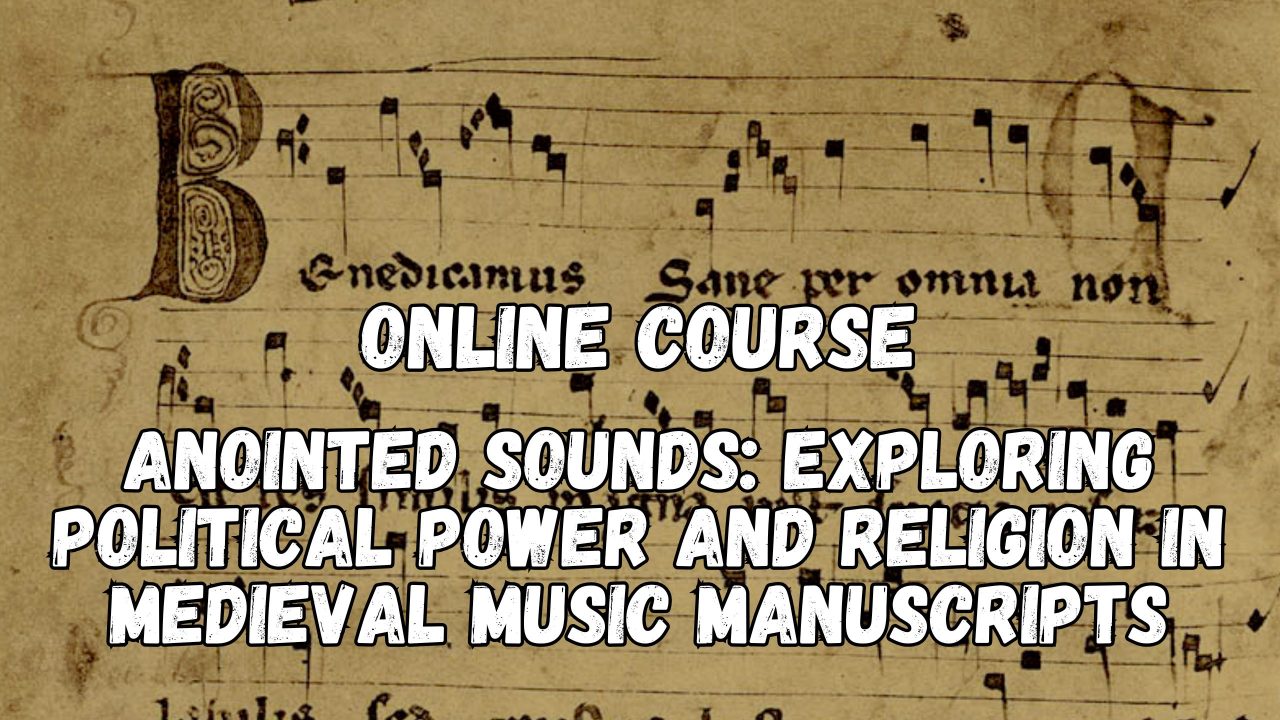
What did a corrupt horse have to do with medieval religion? More than you might expect — and that question alone hints at just how strange, rich, and politically charged the world of medieval music manuscripts really was.
A new six-week online course is pulling back the curtain on that world, tracing the surprising ways that song shaped faith, identity, and power across the medieval period. The course is called Anointed Sounds: Exploring Political Power and Religion in Medieval Music Manuscripts, and it launches on May 24th through Medievalists.net.
If you’ve ever assumed medieval music was just monks humming quietly in stone corridors, this course is designed to change your mind entirely.
Why Medieval Music Was Never Just About the Music
The medieval world didn’t separate art from politics the way we tend to today. Music — particularly music tied to religious ceremony — was a tool of power. Kings used it to legitimize their rule. The Church used it to reinforce doctrine and devotion. Saints were celebrated through song in ways that cemented their authority long after their deaths.
Manuscripts were the medium through which all of this was preserved and transmitted. They weren’t neutral archives. They were carefully constructed objects, often commissioned by powerful patrons, designed to project specific messages about faith, hierarchy, and legitimacy.
The course taught by Sonja Maurer-Dass explores exactly that intersection — the place where parchment, melody, politics, and belief all collide. Through vivid manuscript sources, students will encounter tales of saints, kings, and, yes, at least one corrupt horse, as the course description promises.
What the Course Actually Covers
The course runs for six weeks and is delivered online, making it accessible to anyone with an internet connection regardless of where they live. Each week builds on the last, moving through the layered relationships between music, political power, and religious identity in the medieval period.
Live sessions are held every Sunday from 1:00 to 3:00 pm EST, giving students the chance to engage directly with the material and ask questions in real time. For those who can’t make the live sessions — whether due to time zones, work schedules, or other commitments — all sessions are recorded and available to watch at your convenience.
That flexibility is a significant part of the course’s appeal. You don’t have to rearrange your life to study medieval history at a serious level.
| Course Detail | Information |
|---|---|
| Course Title | Anointed Sounds: Exploring Political Power and Religion in Medieval Music Manuscripts |
| Instructor | Sonja Maurer-Dass |
| Start Date | May 24th |
| Duration | Six weeks |
| Live Session Schedule | Sundays, 1:00–3:00 pm EST |
| Session Recordings | Yes — all sessions recorded for later viewing |
| Format | Online |
The Surprisingly Political World of Saints, Kings, and Song
One of the most compelling aspects of this course is how it refuses to treat medieval music as a purely aesthetic subject. It makes claims. It takes sides.
Consider the role of saints’ cults in medieval political life. When a king or a bishop promoted the veneration of a particular saint through liturgical music and ceremony, they were doing something strategic. They were building networks of loyalty, invoking divine authority, and connecting their own power to something that felt eternal and unquestionable.
The manuscripts that survive from this period are windows into that process. Decorated initials, musical notation, Latin texts — every element of these objects was chosen. Nothing was accidental. The course uses these manuscripts as primary sources, treating them the way a political historian might treat a treaty or a speech.
And then there’s the corrupt horse. The course description mentions it specifically, which suggests it plays a genuine role in one of the stories the course explores — likely a hagiographical tale in which an animal’s misbehavior or miraculous transformation becomes a vehicle for demonstrating sanctity or divine power. Stories like that were common in medieval religious culture, and they were often preserved and circulated through song.
Who This Course Is Really For
You don’t need a music degree. You don’t need to read Latin. This kind of course is built for curious people — history enthusiasts, students, lifelong learners — who want to engage seriously with the medieval world without needing an academic institution to do it.
That said, the subject matter is genuinely substantive. This isn’t a surface-level overview. The focus on manuscripts means engaging with real primary sources, and the themes of political power and religious identity are treated with the depth they deserve.
The course would suit:
- History enthusiasts with an interest in the medieval period
- Music lovers curious about the deep roots of Western musical tradition
- Students of religion, theology, or church history
- Anyone interested in how power and culture intersect
- People who’ve taken other Medievalists.net courses and want to go deeper
How to Sign Up Before the May 24th Start Date
The course begins on May 24th, which means there’s a limited window to register before the first live session. Enrollment is handled through Medievalists.net, where you can find full details about pricing, registration, and any prerequisites.
Given that all sessions are recorded, signing up even close to the start date shouldn’t mean missing out on content. But getting registered ahead of the first Sunday session means you’ll be able to participate live from the beginning — which is likely where the richest discussion happens.
Medievalists.net has previously offered spring sale discounts on its medieval online courses, so it’s worth checking the site for any current promotions before completing your registration.
Frequently Asked Questions
When does the Anointed Sounds course start?
The course starts on May 24th, with live sessions held every Sunday from 1:00 to 3:00 pm EST.
Who is teaching the course?
The course is taught by Sonja Maurer-Dass.
What if I can’t attend the live Sunday sessions?
All sessions are recorded, so you can watch them at your own convenience if you can’t join live.
How long does the course run?
The course runs for six weeks in total.
Do I need a background in music or medieval history to take this course?
net for any requirements.
Where can I register?
Registration and full course details are available through Medievalists.net, where the course is listed under their online courses section.

Leave a Reply