
What does it actually take to keep a household running? If your answer involves scrubbing, cooking, and hauling out the garbage — you have more in common with a Neolithic farmer from 6,500 years ago than you might expect.
A new study of a Middle Neolithic settlement in northern Italy is offering some of the clearest evidence yet that ancient domestic life was far more structured and intentional than previously assumed. The people who lived there weren’t just surviving. They were organizing, cleaning, cooking regularly, and managing their waste — with what researchers describe as genuine purpose and routine.
It’s the kind of finding that quietly reshapes how we think about early human society. Not through swords or monuments, but through ash, crushed shells, and thin layers of compacted dirt beneath an ancient floor.
The Site That Changed the Picture of Neolithic Life
The settlement at the center of this research is called Molino Casarotto, located near the Fimon valley in the Veneto region of northeastern Italy. It dates to the Middle Neolithic period — roughly 6,500 years ago — and it’s considered especially valuable among archaeologists because of what it preserved.
Unlike many ancient sites where objects are scattered and context is lost, Molino Casarotto retained intact layers directly tied to daily domestic activity. That means researchers weren’t just finding tools or pottery fragments out of context. They were reading the actual sequence of life inside a home: where people cooked, where they cleaned, and where they put things they no longer needed.
The study was carried out by Cristiano Nicosia, Federico Polisca, and Gregorio Dal Sasso, with work connected to the University of Padova and the National Research Council of Italy.
What the Evidence Actually Looks Like
The clues aren’t dramatic. They’re subtle — and that’s exactly what makes them significant.
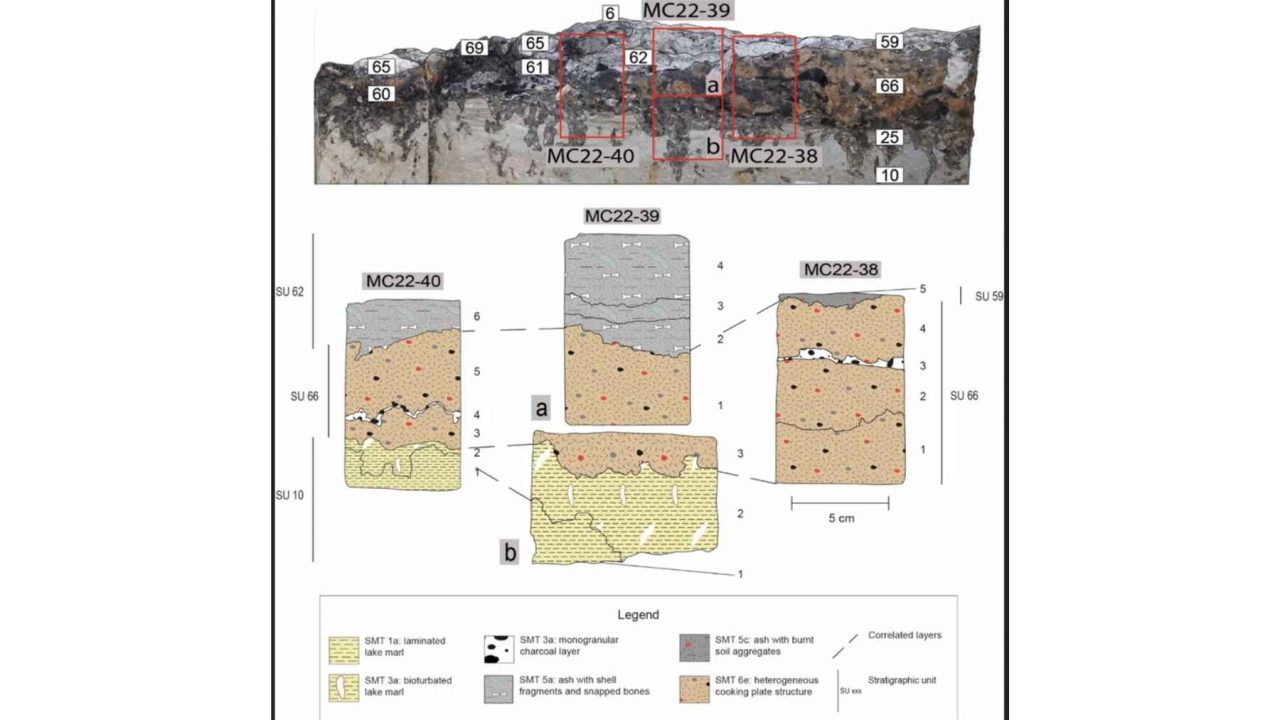
Researchers found evidence of ash deposits, crushed shells, and thin compressed soil layers beneath ancient floors. These aren’t the kinds of things that end up in museum displays, but they’re precisely the kind of microscopic record that tells archaeologists how a space was actually used over time.
The presence of organized cooking areas, deliberate cleaning activity, and designated spaces for refuse suggests that the people of Molino Casarotto weren’t simply existing in their homes — they were actively managing them.
- Regular cooking routines were part of daily life, evidenced by consistent fire and ash deposits
- Cleaning habits left detectable traces in the soil stratigraphy
- Trash was placed in planned, specific areas — not randomly discarded
- The layered soil record preserved the sequence of these activities over time
- The site is located in the Fimon valley, Veneto region of northeastern Italy
What emerges from this evidence is a picture of domestic life that feels surprisingly familiar — structured, repetitive, and socially organized around the rhythms of a household.
Why Cooking, Cleaning, and Trash Matter to Archaeology
For a long time, archaeological attention has naturally gravitated toward the extraordinary: burial sites, ceremonial objects, weapons, large-scale architecture. The everyday work of maintaining a home — the scrubbing, the cooking, the hauling — has often been treated as secondary, almost invisible.
This study pushes back against that assumption. The research suggests that these so-called “minor chores” were actually a hidden engine of social organization. Keeping a home functional required coordination, planning, and repeated effort. Those aren’t trivial behaviors. They are the foundation of community life.
The fact that Molino Casarotto preserved evidence of all three — cooking, cleaning, and waste disposal — in distinct, readable layers is what makes the site so scientifically valuable. It’s rare to find a Neolithic settlement where the domestic record survived intact enough to draw these kinds of conclusions.
| Feature | Detail |
|---|---|
| Site name | Molino Casarotto |
| Location | Fimon valley, Veneto region, northeastern Italy |
| Period | Middle Neolithic, approximately 6,500 years ago |
| Lead researchers | Cristiano Nicosia, Federico Polisca, Gregorio Dal Sasso |
| Institutional affiliation | University of Padova and the National Research Council of Italy |
| Key evidence types | Ash deposits, crushed shells, compressed soil layers |
| Domestic activities identified | Cooking, cleaning, organized waste disposal |
What This Means for How We Understand Ancient Communities
The implications reach beyond one site in Italy. If a Middle Neolithic settlement was already operating with organized domestic routines — planned cooking spaces, active cleaning, designated refuse areas — it suggests that the social structures required to sustain those habits were already well developed thousands of years before written history.
Researchers argue that domestic labor wasn’t peripheral to early society. It was central to it. The ability to maintain a clean, functional living space, manage food preparation consistently, and keep waste away from living areas reflects a level of communal organization that historians have sometimes underestimated for this period.
The ordinary, in other words, turns out to be anything but.
What Comes Next for This Research
The study connected to the University of Padova and the National Research Council of Italy represents an ongoing effort to read Neolithic life through its most subtle physical traces. The site at Molino Casarotto continues to offer researchers a rare window into preserved domestic layers that most ancient settlements simply don’t retain.
As micromorphological analysis — the microscopic study of soil and sediment layers — becomes more sophisticated, sites like this one are likely to yield even more detailed reconstructions of how early communities actually lived day to day, not just how they died or what they built.
The oldest truths about human life, it turns out, are often buried in the dirt beneath where someone once swept their floor.
Frequently Asked Questions
Where is Molino Casarotto located?
Molino Casarotto is located near the Fimon valley in the Veneto region of northeastern Italy.
How old is the Molino Casarotto settlement?
The site dates to the Middle Neolithic period, approximately 6,500 years ago.
Who conducted the research on the site?
The study was carried out by Cristiano Nicosia, Federico Polisca, and Gregorio Dal Sasso, with work connected to the University of Padova and the National Research Council of Italy.
What physical evidence did researchers find?
Researchers found ash deposits, crushed shells, and thin compressed soil layers beneath ancient floors — traces of regular cooking, cleaning activity, and organized waste disposal.
Why is this site considered especially valuable?
Molino Casarotto preserved intact layers directly linked to daily domestic life, which is rare for Neolithic settlements and allows researchers to reconstruct the actual sequence of household activity.
What does this research suggest about Neolithic society?
The findings suggest that domestic chores like cooking, cleaning, and waste management were not minor activities but a central, organized part of early community life — a hidden engine of social structure that has often been overlooked.


Leave a Reply