
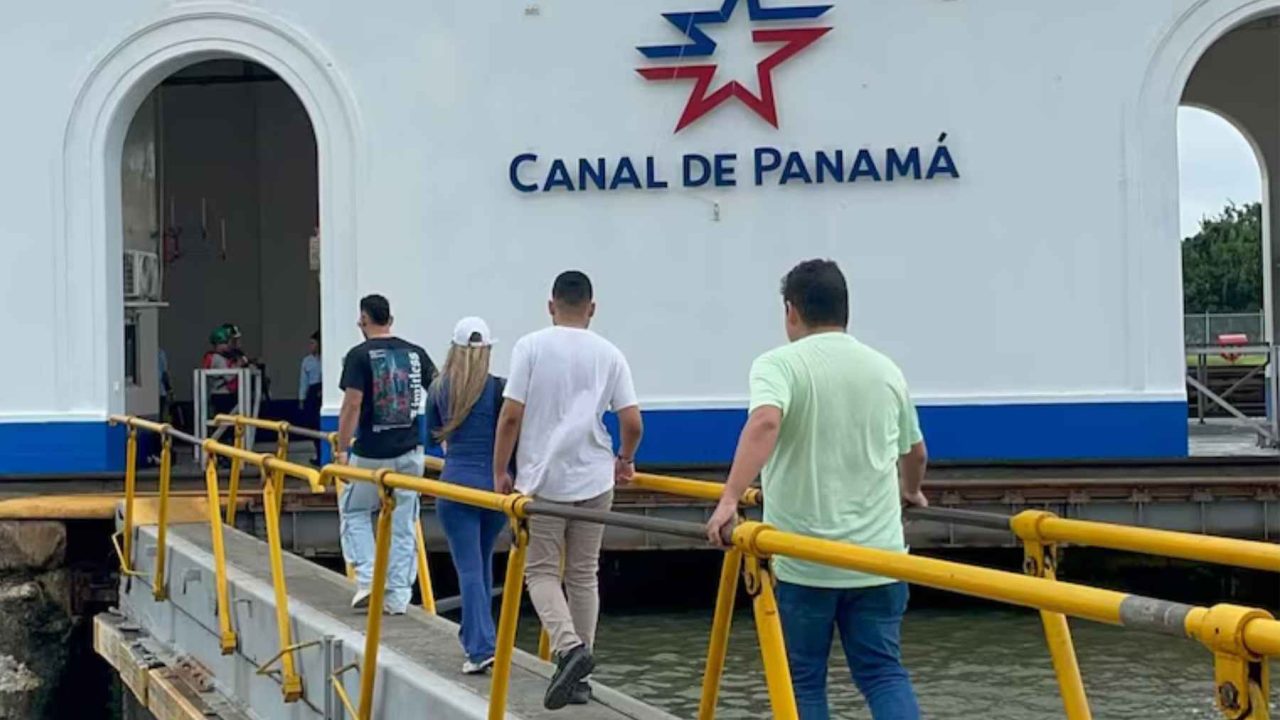
What if crossing one of the most important shipping routes on Earth meant walking beneath it? That is the question Panama City is now seriously entertaining, and the answer — at least in proposal form — is a pedestrian and bicycle tunnel running under the Panama Canal itself.
The idea sounds like something out of a science fiction pitch. But city officials have given it a real name, a real contest, and real conversations with one of the world’s most prominent tunneling companies. The proposal is called “The Canal Underline,” and even though it did not win the competition that first brought it public attention, the project is still very much alive.
Panama City Mayor Mayer Mizrachi described recent developments as news that keeps Panama “on the radar” — and given who is reportedly still paying attention, that phrase carries some weight.
What the Canal Underline Actually Proposes
The concept is straightforward, even if the construction would not be. A protected underground passage would connect Panama City with the area known as Panama Oeste, allowing pedestrians and cyclists to cross without ever encountering ship traffic, highway congestion, exhaust fumes, or noise.
This would not be a subway line or a road tunnel. It would be a human-scale corridor — the contest rules specified a tunnel of up to one mile in length with a 12-foot inner diameter. That is tight enough to be efficient, wide enough to be functional, and specifically designed for people rather than vehicles.
The crossing point matters enormously. Right now, getting between Panama City and Panama Oeste means dealing with surface-level crossings that share space with some of the heaviest commercial traffic on the planet. The canal does not pause for rush hour. A dedicated underground route for people would change the daily reality of that commute entirely.
The Boring Company’s Involvement — and Why It Matters
The March 23 tunnel contest that put this project in the spotlight did not name The Canal Underline as its winner. That is the honest part of the story. But the more interesting development came afterward.
The Boring Company, the tunneling firm founded by Elon Musk, expressed interest in studying the project independently — outside the competition framework entirely. That kind of unsolicited attention from a company that has already built operational tunnels in Las Vegas is not nothing. It suggests the engineering community sees this as a viable concept, not just an ambitious sketch.
Mayor Mizrachi’s framing of the update as keeping Panama “on the radar” reflects a deliberate strategy: even without a contest win, maintaining visibility with major infrastructure players keeps the possibility of funding, partnership, and construction momentum alive.
The Numbers and Specs Behind the Proposal
| Feature | Detail |
|---|---|
| Project Name | The Canal Underline |
| Location | Under the Panama Canal, connecting Panama City and Panama Oeste |
| Tunnel Length | Up to one mile |
| Inner Diameter | 12 feet |
| Intended Users | Pedestrians and cyclists |
| Contest Date | March 23 (tunnel design competition) |
| Tunneling Company Interest | The Boring Company (founded by Elon Musk) |
| Contest Result | Did not win, but project remains active |
The 12-foot diameter specification is worth pausing on. For comparison, a standard car lane is roughly 10 to 12 feet wide. This tunnel would not be a grand underground boulevard — it would be functional, efficient, and deliberately scaled for human movement rather than vehicle throughput.
Why Panama Is Pushing This Right Now
There is more than one reason this idea is surfacing now, and the timing is not accidental.
- Urban mobility pressure: Panama City’s growth has put real strain on its existing crossing infrastructure. The canal is a geographic barrier that divides the metropolitan area, and surface crossings increasingly struggle to handle the load.
- Global attention on the canal: The Panama Canal has faced renewed international scrutiny in recent years over water levels, capacity, and geopolitical significance. Infrastructure investment in the region is a visible priority.
- The Boring Company factor: The existence of a commercially active tunneling company willing to study unconventional projects has made proposals like this more credible than they would have been a decade ago.
- Soft power and city branding: A pedestrian tunnel under the Panama Canal would be a genuinely singular piece of infrastructure — the kind of project that puts a city on the global map for innovation rather than just commerce.
Officials have noted that even the contest process served a purpose beyond selecting a winner. It generated international attention, drew in serious engineering interest, and demonstrated that the city is willing to think ambitiously about its infrastructure future.
What This Would Mean for People Who Live There
For residents of Panama City and Panama Oeste, the practical impact would be significant. A safe, car-free crossing under the canal would open up commuting options that do not currently exist — particularly for cyclists and pedestrians who have no viable route across the waterway today.
It would also reduce dependence on vehicle crossings during peak hours, potentially easing congestion at surface-level chokepoints. And for a city that sits at the crossroads of global trade, a landmark piece of human-scale infrastructure would signal something important about how Panama sees its own future.
Supporters of the project argue that connecting the two sides of the city on foot is not just a transportation issue — it is a quality-of-life issue for the people who live with that divide every single day.
What Happens Next for the Panama Canal Tunnel
The project’s next steps are not fully defined, but the path forward involves continued engagement with The Boring Company outside the original contest structure. Mayor Mizrachi has indicated that staying visible to major infrastructure players is the current priority.
No construction timeline has been confirmed. No funding agreement has been announced. What exists right now is a serious proposal, a named tunneling company that has expressed study interest, and a city government that has chosen to keep pushing rather than let the idea fade after the contest.
Whether that momentum translates into a shovel in the ground depends on engineering assessments, financial agreements, and political will — all of which remain works in progress.
Frequently Asked Questions
What is The Canal Underline?
It is a proposal for a pedestrian and bicycle tunnel running beneath the Panama Canal, connecting Panama City with the area known as Panama Oeste.
Did The Canal Underline win the tunnel design contest?
No. The proposal did not win the March 23 tunnel contest that first brought it public attention, but the project remains active.
Is The Boring Company officially building this tunnel?
Not yet. The Boring Company expressed interest in studying the project outside the competition, but no construction agreement has been confirmed.
How long and wide would the tunnel be?
The contest specifications called for a tunnel of up to one mile in length with a 12-foot inner diameter.
Who is behind the push to keep this project alive?
Panama City Mayor Mayer Mizrachi has been publicly vocal about maintaining momentum, describing The Boring Company’s continued interest as news that keeps Panama “on the radar.”
When would the tunnel be built?
No construction timeline has been confirmed at this stage. The project is still in the study and engagement phase.

Leave a Reply